 |
| Source: http://kamigarcia.com/2013/01/12-books-i- loved-in-2012-giveaway/ |
When I was in elementary, I told my classmates that there were monsters and ghosts living in our backyard. I somehow managed to make them believe that I could give them powers to defeat these creatures. We had to meet during lunch breaks so we could hatch a plan to defeat the evil forces. From then on, I became the leader of a group. I even assigned names and “powers” to each member. It was going pretty well for a couple of weeks, but we had to break the group up because a lot of members were fighting over who should get certain powers and who should be my right hand. Some were starting to doubt if the monsters were true. I guess my Mean Girls career was short-lived.
At some point in our lives, we’ve all belonged to a group. How many times have you seen children gathering around and identifying themselves as part of a certain social circle? There’s Melanie’s group, Abby’s group, the smart people’s group, and the group of boys who always hang out in the billiards place. Kate Winslet, in the film adaptation of Divergent, said, “The future belongs to those who know where they belong.” This is the truth for most people. When your family doesn’t want you, you find other people who do. When society seems to have no place for you, you try to make a place of your own. Love and belongingness seem as important as food and clothing, especially with teenagers who are still trying to figure out who they are and what they should do with their lives.
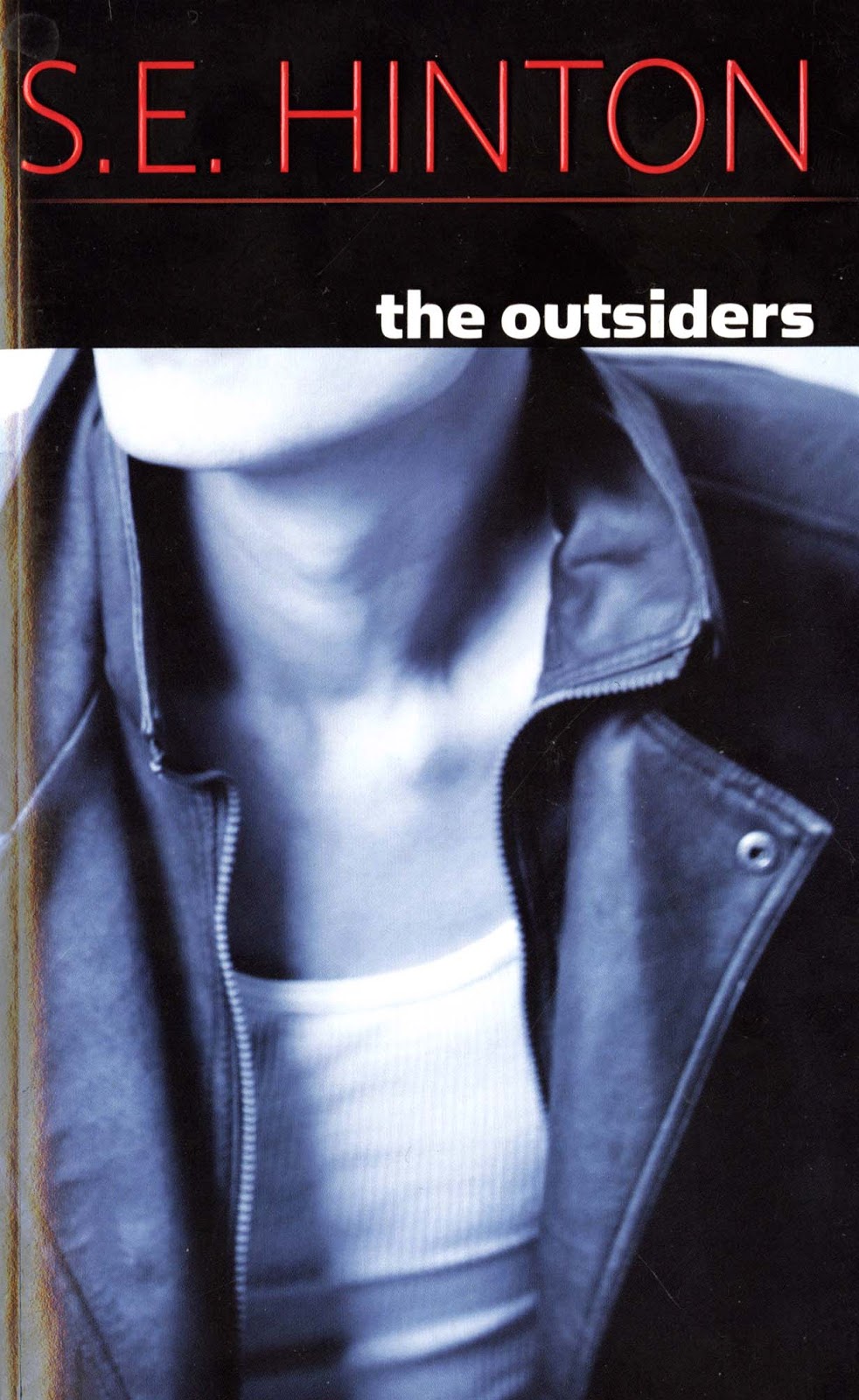
S. E. Hinton’s The Outsiders effectively paints a portrait of teenage angst and pride and their need to belong. It is a story about two gangs, the Greasers and the Socs (shortened form of Socials). The Greasers are a gang made up of poor members, while the Socs consist of rich kids who could afford fancy cars and clothes.
Here are some awesome things about this book that you need to know.
1. The protagonist’s name is Ponyboy Curtis. (Yes, that’s the name you’ll find in his fictional birth certificate.)
2. One of his brothers is called Sodapop Curtis.
3. It’s only 180 pages long.
4. It’s a classic and has been in print since 1967.
5. It was written by a sixteen-year-old girl.
The fact that it is a book that inspired generations of teenagers and was even made into a movie starring Rob Lowe, Tom Cruise, and Ralph Macchio is already enough reason for me to pick it up.
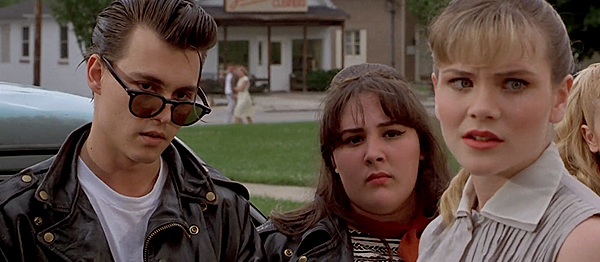
The story dwells on the hatred between the two groups and the things they do to one another in order to prove who the better gang is. It involves a lot of rumbles, trash talking, and threats. If you’ve seen the 1990 movie Cry Baby, then you’ll have no trouble imagining the setting.
 |
| Source: https://editorial.rottentomatoes.com/article/why-john-waters-cry-baby-deserves-more-attention/ |
The story is narrated by Ponyboy Curtis, an orphan who lives with his two brothers, Darry and Sodapop. Although poor, he is a very bright student and excels in school. He’s the second youngest in the Greasers at only fourteen years old at the start of the novel. We see him trying to navigate through life and deal with his circumstance.
The rest of the Greasers include seventeen-year-old Steve Randle, who is a car geek; shoplifter Two-Bit Matthews, who think life is one big joke; Dallas Winston, who seem to be the most hateful in the group; and Johnny Cade, the youngest in the bunch. He is unwanted by his family, and his parents don’t care for him in the least.
One of the most interesting characters is Darry Curtis. He is a great example of someone who had to change his life’s course because of poverty. Since his parents’ death, Darry had to man up and do the responsible thing. Being the eldest of the orphans, he works multiple jobs to make ends meet. He had a promising future and was a popular kid in school, but they do not have the means to put him through college. He had to change his demeanor and toughen up to survive. In my opinion, it is quite unfair. He was only twenty.
The fight for self-preservation had hardened him beyond caring.
The novel also shows how circumstances affect friendships and decisions. The rich kids seem to generally hang out only with people who are in the same caliber as them financially. The poor kids also seem to have their own groups with their own set of rules. One side may not understand the other because of their differences in experience and consequence. This is a sad truth that was presented in the book during one of the gang fights, when Darry saw his former friend on his enemy’s side.
They used to be buddies, I thought, they used to be friends, and now they hate each other because one has to work for a living and the other comes from the West Side.
The themes of the book revolve around belongingness and friendship. It is quite touching to see these poor kids, who seem to be misunderstood and unwanted by society, fending for themselves and finding a family in each other.
You take up for your buddies, no matter what they do. When you’re a gang, you stick up for the members. If you don’t stick up for them, stick together, make like brothers, it isn’t a gang any more. It’s a pack. A snarling, distrustful, bickering pack like the Socs in their social clubs or the street gangs in New York or the wolves in the timber.
But although the story focuses mainly on the struggles of the poorer gang, the author also presents the other side. The Greasers may be poorer, but the Socs also have their own problems and insecurities. One teenage girl who was part of the higher class remarked, “Things are rough all over.” The problems may not be financial, but it is every bit as hard as the Greasers emotionally. S. E. Hinton does a great job in presenting the motivation of both groups.
There are two sides to every gang fight. Each group has a different reason for fighting. When the fights break into a war, that’s when we know who are willing to stick up for us. That’s when we realize what things are worth fighting for. And that’s when we see that some fights are not meant to be fought. We all have the need to belong, to have someone sticking up for us. We do things—sometimes stupid ones—just to belong somewhere.
Although the novel circles around distinct groups, throughout the novel, Ponyboy desires to have unity.
It seems like there’s gotta be someplace without greasers or Socs, with just people. Plain, ordinary people.
We see this situation all the time. A pack of out-of-school youth is out on the street, walking like they own the world. You think to yourself, They are worthless delinquents. They should do something better with their lives. But we never know their side of the story. We never see their desire to belong and to be wanted. We never feel their hunger or their hurt. We may see a rich kid and think, He’s so lucky. He has been given everything. But we don’t feel the pressure of him trying to make a name of his own. We don’t get to watch him long for his busy parents who have little time for him. We act like we know the whole story, but we don’t. A piece of wood may seem fine and strong until we see that the inside is slowly being carved out by termites.
The author’s motivation in writing this book was her friends, who could be identified as Greasers. She saw a friend being beaten up because the rich kids didn’t like him because he was less fortunate. Fueled by a desire to give voice to the helpless, she wrote the controversial novel.
This novel is such an eye-opener. It teaches the readers to be more understanding of people. They are who they are, and they act the way they do because of their circumstances. Generally, we all have the power to change our destinies by persevering, but not all people know this. Not all are as lucky, and not all are as strong. But the truth remains that we can all learn from our mistakes.
The novel has violence, accidents, deaths, and heroic acts. If you want a short but impactful classic to read in one sitting, this is the book for you.
If you’ve already read the book, tell us what you think about it in the comments. If you have any recommendations for short classics or books with similar themes as this, feel free to tell us.
 It's a Ping Thing