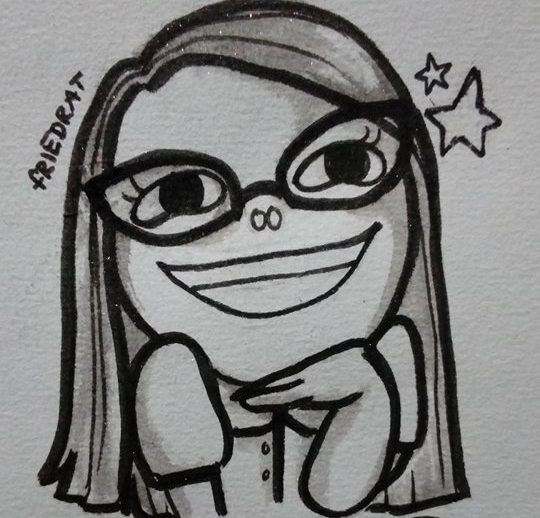
When people ask me about my course, I always get the same look of amusement. When they ask me about my job, however, they give me confused looks that remind me of elaborately made memes. What then ensues is the asking of the same question: why?
I am an engineering graduate—chemical engineering to be exact. When I tell people I work as a copy editor for a self-publishing company, they look at me quizzically. Who in their right mind would spend five years studying long and complicated equations, theories, principles of design, etc., and end up editing manuscripts? Rules of grammar are rarely discussed in calculus classes. Here’s how it began.
My love for books started with my competitive nature. I’ve always wanted to be better than my peers. If they excel at dancing, I’d join the class dance presentation (even though I look like a wobbling stick). If they write three hundred words in an essay, I’d write five hundred. So when I saw a peer carrying a gigantic book to the airport, I approached her and asked what subject she was studying for. My competitive hormones were triggered when she replied, “Nothing. I’m just reading for fun.” And I thought, well, if she’s reading for fun, I could read for funmore.
I never stopped reading novels and consuming stories through books since then. Although it started out with a need to compete, I discovered it was really the most fun thing I did. Here’s what I realized:we all want to escape reality in one way or another. Different people have different outlets for doing this. Some watch movies, some play games, and others travel to distant lands just to be away for a while. Being the introvert that I am, I chose to stay in one place and instead take my mind on adventures. And so began the journey of late-night readings, book collecting, and constantly pestering my classmates to read more.
The love for the written word took me places. I became the editor-in-chief of our high school paper, won two national competitions, traveled, and earned enough cash prize to fund my chocolate-loving needs.
In my desire to finally be a “proper adult,” I looked for a job. I scrolled through Facebook for hours. Then, a particular post caught my attention. The post advertised a job opening for copy editors, and it caught my eye particularly because it showed the copyediting symbols I was so used to seeing. I readily submitted my resumé and was interviewed over the phone.
“Are you familiar with any writing standards?” the lady on the other line asked. “Do you know about the Chicago Manual of Style or CMS?” I answered no to both questions. When I was editing for the school paper, I thought there was only one rule for everything—observe proper grammar.
So naturally, when I was scheduled for an exam, I went to an Internet shop, and researched about CMS. And if you’re familiar with that style, you’ll know the previous sentence is inappropriately punctuated. A comma is not used between parts of a compound predicate unless misreading is likely. That’s rule 6.29.
During the training period, I learned a lot. The most important thing that I learned is that my knowledge about copyediting is inadequate. I discovered the hundreds of rules and realized I’ve been doing a lot of things wrong. On top of the rules, there are also house styles that we need to consider. I didn’t know US is best used as an adjective only and should be spelled out as United Stateswhen referring to the country itself. Most importantly, there is a rule stating that no hyphens should be used for personal titles consisting of a principal noun with modifiers. So titles like commander in chief, delegate at large,and editor in chief are not hyphenated. If you noticed the mistake earlier, kudos to you. I held that title for three years, and I had not realized I’ve been spelling it incorrectly.
I have much yet to learn. Now, every time I receive a manuscript to edit, it’s my turn to give a confused look. Some submissions are fairly easy to deal with. However, most contain confusing sentences that I have to read ten times before finally deciding it doesn’t make sense.
I am not a hundred percent sure all the time how to spell a word or if I’m following proper punctuation and capitalization. I am still struggling to learn and fit in an industry I am not truly familiar with, but I do know that I love it here. I could finally talk about plot changes, character development, and world building without being laughed at or ignored. I haven’t decided yet what my goals are careerwise, but I do know I am enjoying what I’m currently doing. For now, let me muse about other authors’ comma placements, en dashes, and sentences that may or may not be written in another language. And if you find any mistakes in this article, feel free to point it out. I’d be happy to curl up in a corner and feel the shame seep in.
 It's a Ping Thing