

Spanish is fairly easy to learn for Filipinos because we were a colony of Spain for more than 300 years, from 1521 to 1898. When the Spaniards came, they introduced their culture as well as their language to our ancestors, which, as a result, influenced the evolution of the Philippines into what it is today. It is evident that Spanish has influenced the Filipino language. In fact, the common Filipino greeting “Kumusta?” is from the Spanish ¿Cómo está?. The names of the months in Tagalog—Enero, Pebrero, Marso, etc.—are similar to Spanish—enero, febrero, marzo, etc. Even the numbers are the same. Words like sibuyas (from cebollas) and pisara (from pizarra) are derived from Spanish. So in terms of vocabulary, Filipino learners are at an advantage.
When I started learning Spanish, I found that I was going through the lessons fast. I didn’t have a hard time with most of the words because they are used in both Cebuano and Tagalog. The sentence structure is similar to that of English, with a few exceptions like the placement of the negative noand the adjectives. The real struggle in Spanish is definitely with the verbs. My eyes widened when I first encountered the conjugations at Culture Alley Spanish. Unlike English where the verb conjugations are relatively few, in Spanish, there are different conjugations for different pronouns. And because Spanish is gender-sensitive, there are more pronouns. I sucked it up anyway and memorized them.
For the verb caminar (to walk):
Yo camino
Tú caminas
Él camina
Ella camina
Usted camina
Nosotros/Nosotras caminamos
Vosotros/Vosotras camináis
Ellos caminan
Ellas caminan
Ustedes caminan
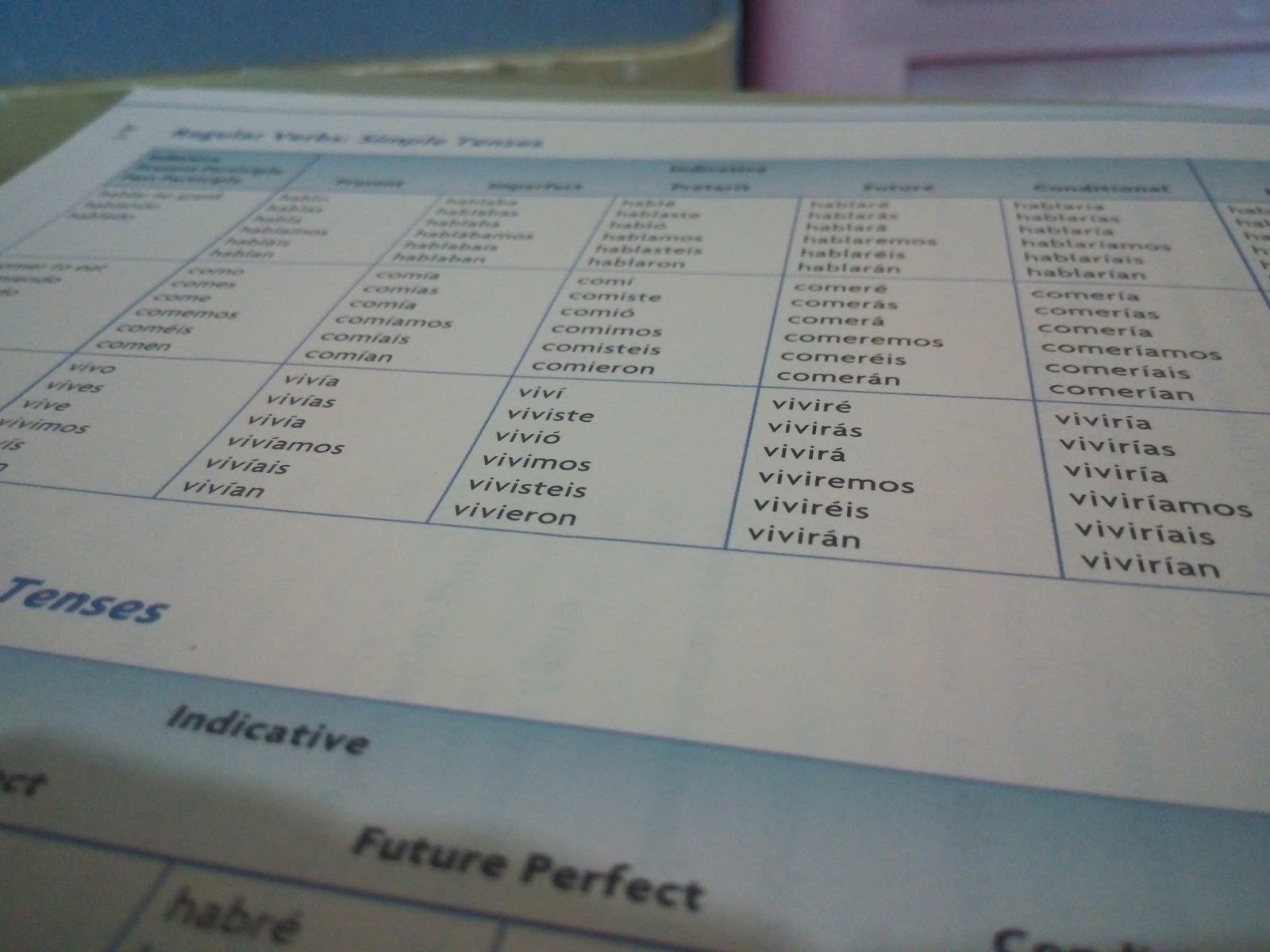
I was pretty proud of myself after I had memorized the above conjugation, and I thought I was good to go. However, later in the lesson, I found out that there are three main kinds of Spanish verbs—the -ar, -er, and -ir forms. Examples include pensar(to think), comer (to eat), and vivir (to live). Not only that, there are also irregular verbs that conjugate differently, In addition, just like English, there are different tenses. In Spanish, the tenses include the present, preterite, future, perfect, imperfect, conditional, progressive, etc. This list of conjugations of caminar shows the different forms for one verb.
Another struggle I have with learning Spanish is understanding native speakers when they talk. I found that when I’m watching Spanish telenovelas, it is difficult for me to understand them just by listening, but with the Spanish subtitles on, I can follow the dialogue fairly easily. After a little research, I found out that languages have different speeds, called speech tempo. Unfortunately for Spanish learners, it is the fastest European language and the second fastest in the world, with a syllable-per-second velocity of 7.82 according to a study done by researchers at Université de Lyon. This is fast compared to English, which is only 6.19 syllables per second. The only language that is faster than Spanish is Nihongo, or Japanese, at 7.84 syllables per second.
Spanish is spoken in around twenty countries in the world, which is both an advantage and a disadvantage to learners. It is advantageous in the sense that you can understand the language of twenty more countries. The disadvantage is that some words in these countries are different. This video highlights the struggles of Spanish learners in terms of the different vocabulary in different Spanish-speaking countries.
Despite these difficulties, however, the joys of learning a new language is incomparable to the hardships of the learning process. It opens your eyes to a new culture and enables you to speak to millions more of people. In the end, fluency in a new tongue is worth the struggle.
 It's a Ping Thing