 |
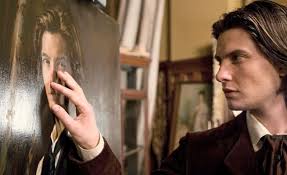
| Source: https://www.star2.com/culture/2017/10/04/dorian-gray-oscar-wilde-ageing-issues/ |
“The picture, changed or unchanged, would be to him the visible emblem of conscience.”
Beautiful people are given the natural advantage of being taken more seriously than their average-looking counterparts. Their words are given more thought. We unconsciously become more careful with our actions when we’re around good-looking people. Whether we like it or not, our judgment is somehow influenced by how a person looks or conducts himself. But what if that beautiful façade hides an unpleasant personality and a monstrous soul?
Of all the classic books that were recommended to me, The Picture of Dorian Gray is perhaps the most interesting. It is referenced in books and movies, and the synopsis caught my attention from the first time I heard it. At less than 200 pages, it is a thought-provoking read that touches on current issues of self-love and aging.
Summary
Dorian Gray is a wealthy young man of extraordinary beauty. He has the face that would turn heads and mesmerize those who dared to look. It was for this reason that the famous painter Basil Hallward chose him as the subject for his greatest masterpiece. One day, as he was painting Mr. Gray, they had a discussion about youth and beauty, and it was during this particular afternoon that Dorian Gray realized he could not keep his beauty forever. He made a wish that would turn out to be the cause of his demise.
“How sad it is! I shall grow old, and horrible, and dreadful. But this picture will remain always young. It will never be older than this particular day of June . . . If it were only the other way! It it were I who was to be always young, and the picture that was to grow old! . . . I would give my soul for that!”
Unfortunately for Dorian, that was also the afternoon when he met Basil’s friend, Lord Henry Wotton, whose views in life were unpopular and sometimes appalling. But he is very clever and was able to influence our young protagonist’s perceptions.
When the painting was done, Basil Hallward gave the picture to Dorian. The latter displayed it in his room until the day he discovered that the picture had changed. He then realized that the painting is not ordinary; it is a window to his own soul. From then on, the picture became uglier while Dorian Gray kept his beauty. He became more and more corrupted until even he could no longer look at the painting without hating what he had become.
-o-
In terms of writing, I would say Wilde has a way of making serious dialogues entertaining to the reader. The many quotable sentences, especially those given by the witty Lord Henry, provide us with something to think about. His thoughts and views, although unpopular, were said very well that you can’t hate him even if his words border on offensive. My problem with this book lies on the parts that were dragging too long for my taste. Although he does not deal on the details of the setting, Wilde does tend to ramble on when it comes to enumerations. For example, when Dorian became engaged in many hobbies over the years, Wilde described a lot of them in detail. Parts like this were very tedious to read. This is the reason why it took me almost two months to finish such a short book. Some parts were very exciting and fast-paced while a lot of the scenes were boring and lagged on for too long. It was like riding in a very fast car and suddenly stopping for a significant amount of time before speeding off again.
From the first chapter, I could sense a tinge of homosexuality. Perhaps it was the way Basil worshipped Dorian’s beauty. He talked as if he were in love with him. I researched about this and found out that the author was in fact homosexual, which was reflected in his book.
I loved the characters even though they were quite twisted. Observing them during their dialogues and witnessing their inner struggles was almost like examining a newly discovered creature. I find it fascinating that they cared so much about frivolous little things and how they give so much thought to beauty and class.
This is Oscar Wilde’s only novel, but it was so successful that a phenomenon was named after it. The Dorian Gray syndrome (DGS) is “characterized by a man’s extreme pride in his personal appearance and the fitness of his physique, which is accompanied by difficulties in coping with the requirements of psychological maturation and with the aging of his body.”*
This is definitely a good classic book to pick up even if you’re not into classics that much. It could be read in one sitting if you choose to, and the ideas discussed here is easily relatable to the present generation. With the advent of social media, people care so much about how they look and how they are perceived by others, making this book as relevant today as it was in the 1800s.
Have you read the book? Tell me what you think about it in the comment section.
 It's a Ping Thing