To better understand what I’m going to tell you, here’s a little background. I used to work for a publishing company in Cebu City, but I had to resign to go back to my village (of Konoha?) to pursue my studies in law. However, I’ve decided to drop out of my previous law school to transfer to another university, allowing me a long time to watch Naruto, a show I had started when I was still in the fifth grade. While waiting for classes to start and in between episodes, I’m working as a freelance academic writer online to feel like I have something to look forward to every day other than Naruto’s installment as the seventh Hokage. This article describes my experiences in both full-time and part-time jobs.
With my full-time job, I had worked fixed hours for a fixed salary with some bonuses here and there. This was both an advantage and a disadvantage depending on how you look at it. It was advantageous because you are sure to have a paycheck at the end of two weeks, and you know how much you are going to get so you can budget accordingly. However, the disadvantage is that aside from a few bonuses, there really is no other means for you to increase your income unless you have side hustles. That’s basically the problem in general for jobs with no commissions. However, keep in mind that some full-time jobs offer commission-based earnings on top of the basic salary.
In terms of leaves and vacations, there were strict rules in our company that required us to plan our vacations two weeks in advance. This is understandable because the manager needs to know how many people are going to be present on a particular day so she can assign the projects accordingly. Our department was relatively small, with only around eighteen people, so we were not allowed to take leaves together. If many of you and your coworkers are planning to take a leave of absence on the same date, you have to be the first to tell the manager that or you’ll just have to push your vacation to a later date.
In addition, there is also the pressure of being late. I cannot count how many times I had to run a mini-marathon to the sixth floor just to punch in on time. It was during these times that I wish I had ninja training. There were only two biometric scanners in the office for signing in, and if there’s a long line, you can say goodbye to your attendance bonus because no matter how you look at it, 9:00 is not the same as 9:01.
Aside from the time and salary limitations that are common to full-time jobs, my company had offered me a wonderful family and a fun environment that made routine work less tedious. I was lucky enough to be in a company that offered entertaining activities to the employees. There were always events, games, and competitions that allowed short breaks from the job.
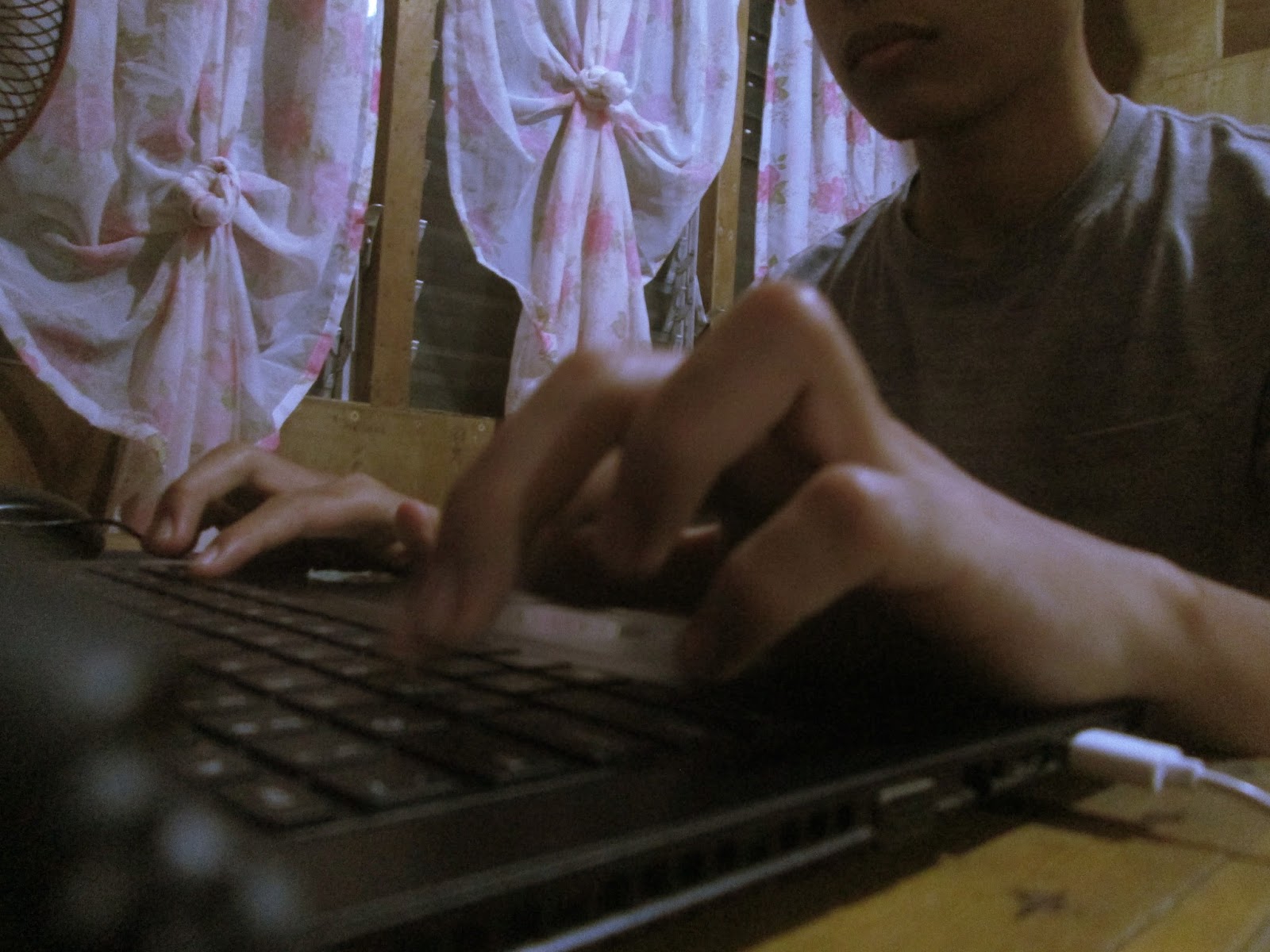
On the other hand, freelancing allows me to have control of my time and income. I could choose which projects I want to take and the days that I want to work. If, for example, I suddenly want to go on a week-long vacation, I may do so. The best thing about being a freelancer is that you may take as many breaks as you need while working. I actually take naps in the middle of projects to allow my eyes to rest after hours of staring at a computer screen and also to gain a fresh perspective afterward. I’m the kind of person who is more efficient after a thirty-minute shut-eye, so this works for my benefit.
However, freelancing does require a lot of self-discipline to produce high-quality work and meet the deadline. There are no more bosses to remind and reprimand you for not working, but you have to stay disciplined to allocate hours in the day for your projects. You may do them last minute, but the stress is just too much if you allow that to happen. Believe me. I had spent restless nights always thinking about projects that I haven’t yet finished yet and wondering if I had enough time to do them properly. Aside from self-discipline, it is also important to be able to gauge the projects accordingly. You have to know which ones are doable with the given deadline and if they are worth the money you are paid for.
Freelancers need to use planners whether digital or not. Unlike full-time jobs where your work is usually the same every day, part-time jobs offer a variety of tasks for different jobs. Freelancers usually work for different clients and have different deadlines for different projects. You may choose not to work for three days straight, but you might also have three projects due on a single day. Thus, it is imperative to plan and schedule in advance and actually stick to the schedule.
In terms of perks and bonuses, freelance jobs do not take care of employee benefits such as social security and government care payments. You have to pay them yourself. Another benefit present in most full-time jobs but not in freelance is the health insurance. My previous company had a wonderful health insurance policy that many employees continue working there for the sake of the insurance alone. It is no question that health problems could equal to huge medical bills that may drain your life savings. A way for freelancers to prepare for such events is to get an insurance policy themselves. This means that freelancers need to plan their finances well as they are ultimately the ones responsible for many of the bill payments.
Both full-time and freelance jobs have their pros and cons when it comes to schedule, environment, and income. These jobs vary significantly, and each factor should be considered. You have to work according to your preference and considering your overall happiness. Choose a job that not only meets your desired income but also allows you to live a meaningful and fulfilling life. If none of these works out, you could always choose to be a shinobi. Something to think about. I know I will.
 It's a Ping Thing