The Girl on the Train: A Book Review

Source: https://www.whsmith.co.uk

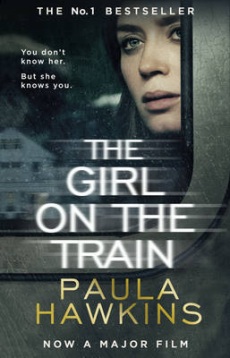
Rachel is a regular in the 8:04 train to London. She’s been through this ride so many times that she has memorized the houses they pass by, observing the lives of those who live in them. She makes up the names of the people she sees and invents stories about them in her head. Then one day, she witnesses something gruesome. She went home with a bloodied head and flashes of an attack that may or may not have happened. A woman is reported to be missing, last seen at the exact time and place Rachel was before she blacked out. The problem is Rachel could not remember. She was drunk, as she always is, and she couldn’t tell reality from the imagined. The girl on the train is no longer just an observer. She’s now part of the story, unfortunately, as a suspect.

I was excited to read this book especially because the film adaptation stars Emily Blunt, one of my favorite actresses. I was warned that I was not going to like the protagonist because she is an alcoholic and is an unreliable narrator. This turned out to be true. Although Rachel was trying hard to stop drinking throughout the novel, she would always slip back to her habits when something unfortunate comes up. Sometimes, I felt like I wanted to just get into the novel, grab her bottle of wine, and smack her in the face with it just to get it over with. However, I do relate to her in a way. She is a divorced woman living with a roommate in a place she could no longer afford. She just lost her job, her husband, her house, and, little by little, her motivation to live. Basically, like most of us, she’s still trying to figure out what she’s supposed to do next, striving to discover the next step on a day-to-day basis. I specifically love how she describes what she feels because then I know how lost she is and how hard she’s trying to change. I did not expect to sympathize with this character at all especially because I don’t get why people drink alcohol in the first place. But Paula Hawkins did a great job because I ended up rooting for her despite her tendency to always make the wrong and dangerous move.

The novel is told not only from Rachel’s perspective, however. We get to hear from two more characters—the missing woman and Rachel’s ex-husband’s new wife. Throughout the book, we get to know more about each of these three characters and their secretive past. We know from the get-go that Rachel is messed up and every day seems to get worse for her. The other two, however, seem to lead perfectly normal lives until we delve deeper into their stories and discover their demons. If there is one thing I took away from this novel, it was that no matter how happy someone seems from afar, there’s always a regrettable past that looms in the background, just waiting to be exposed.

The first half of the novel slowly introduces us to the characters while also introducing the tension building up. We learn that all of the people in the story, although strangers at first, have some connection with one another at some point in their past. In terms of pace, the first parts were quite slow since we are still getting to know the real people behind the entries, but it was actually my favorite part. I loved learning about the women’s vulnerabilities and how they are trying to handle them.

My only issue with the plot is with the big reveal. The mystery was finally solved, but I think it was solved too early and too gradually that it did not take me by surprise. Rachel’s flashbacks, although not all real, gives the readers the idea about what truly happened, so a slower build-up towards the end gave it a dragging feeling. The best thing about thriller novels for me is the suddenness and unexpectedness of the revelation. This book, unfortunately, did not give me that. After the mystery was cleared up, I thought that there was no point in reading further, seeing that the next parts are obvious. And indeed, they were. There was nothing new with the story in general. When you want an action-packed and mind-blowing novel, this is not the one you’re looking for. However, it is a relatively engaging book, and I recommend it for those who are stuck in a rut and whose lives seem to fall into pieces. The characters will show you that you’re not alone and that you can start over again. Just avoid observing people from trains. It might prove fatal.
Effectivity of Philippine Laws

Suppose the Congress had approved a bill that punishes the use of the Internet with life imprisonment. This particular bill was then signed into law by the president on August 8, 2020. Assume that the law does not violate the Constitution and is valid in every regard. On the same day, Kyle, being a Shawn Mendes fan, decides to go online to look for tickets to his idol’s latest concert. Can the police arrest Kyle and make him spend the rest of his life in prison, dooming him forever to a boring Internet-less existence? When is a law considered enforceable in the Philippines? Can you be prosecuted for a law you did not know existed?

When it comes to the effectivity of laws in the Philippines, the main governing provision is Article 2 of the Civil Code as amended by Executive Order No. 200. According to Article 2,

Laws shall take effect after fifteen days following the completion of their publication in the Official Gazette, unless it is otherwise provided.

This has been amended by EO 200 to include the publication of laws not only in the Official Gazette but also in a newspaper of general circulation in the Philippines. This is because the Official Gazette tends to be released erratically and has limited readership.

Given Article 2 and EO 200, it is thus important that laws have to be completely published first before it can take effect and be enforced. This is especially important to those laws that are penal in nature, meaning those that entail punishment if not followed. This makes sense because it would be unfair if the government would punish the citizens for violating something they did not even know was prohibited in the first place.

The phrase unless it is otherwise provided appears in Article 2. Does this mean a law can expressly state that it should be enforced immediately without the publication that would inform the people about its provisions? It depends. This phrase refers to the number of days after publication of the law, not the publication itself. For example, if the law expressly states that it shall take effect 10 days after the complete publication in either the Official Gazette or a newspaper of general circulation in the Philippines, then that should be followed. The fifteen-day rule is applicable only to those laws that do not expressly provide the date of effectivity. EO 200, for example, states in Section 3 that it shall take effect immediately after its publication in the Official Gazette. Thus, there is no need to wait for fifteen days before it can be effective. However, there are laws that can expressly state that they can be effective immediately upon approval. This means that it is not necessary for the law to be published, but a condition must be met: the law must not be punitive in character. If it entails punishment, publication is required.
Do all laws need to be published? Generally, all statutes, including local and private laws, should be published. However, those that are merely internal in nature do not need publication for them to be effective. Another example includes letters of instructions that provide the guidelines for the subordinates in an administrative agency.

To summarize, a law becomes effective

1. On the date it expressly provides

or if no such date is provided,

2. 15 days following the completion of its publication in the Official Gazette or in a newspaper of general circulation in the Philippines

The publication step is necessary in all punitive laws because it would prejudice the people if they are made to answer for something they did not know was illegal in the first place. However, suppose a person is not aware of the existence of a law that has been in effect for years. Is it a valid excuse for him not to be convicted? Article 3 of the Civil Code violently shakes its head in answer. It states

Ignorance of the law excuses no one from compliance therewith.

This is shown in the Latin maxim Ignorantia legis non excusat, which has basically the same meaning as the provision in Article 3. Just because a person has not seen the published law or has no knowledge of it does not excuse him from the punishment. This is for obvious reasons. What if Mr. X wanted to kill Mr. Y and during trial, his defense was that he did not know that there was a law against killing people because he has not read it in the Official Gazette or in any newspaper? Who was to say he had really not read it? This system just spells disaster. According the famous case of Tañada v. Tuvera, that every person knows the law is a conclusive presumption. Thus, as long as the lawmaking body complied with the publication requirement, the law can be enforced on anyone under the Philippine jurisdiction whether or not the accused has knowledge of the law.

Going back to our example above, the Shawn Mendes fan cannot be legally prosecuted for searching for tickets online since the law was punitive in character. It cannot be effective immediately without prior publication. However, once it takes effect, he can be legally arrested for going online. I suggest that meanwhile, he make the most of his Internet time by booking all tickets in advance and downloading all of Shawn’s albums. I highly recommend listening to “Mercy” and “In My Blood.” Those are my favorites.

Frankenstein: A Reflective Book Review

Source: espalhafactos.com

Frankenstein is a well-known novel that has gained popularity through the many film adaptations over the years. Going into this book, I had not seen any of those adaptations, and I knew only two things: there is a monster and he was made through experiments. This book is referenced in so many movies and TV shows that include characters who love to correct others since it is a common misconception that Frankenstein is the monster, when in fact, it’s the name of its creator. Although only a few pages long, Mary Shelley’s 1817 masterpiece has stood the test of time because of its ability to make the reader question what it is to be human.
The book is told in letters and starts with R. Walton informing his sister in England that he was going to take a long voyage with his date of return unknown. When the weather became colder, Walton and his men saw a huge figure riding through the snow and rescued its pursuer, the infamous Victor Frankenstein, the titular protagonist of the story. Frankenstein then told Walton of his journey, which the latter documented in letters to his sister.
The book tells how Frankenstein experimented on dead bodies and had succeeded in making a live being out of them. Upon seeing his creation, however, he ran away from it, wishing to never see it again. Then the murders started, and the two were destined to be each other’s enemy until one of them expires. I love how Shelley was able to give the readers a view from the monster’s perspective. I think it was one of the most beautiful parts of the novel because I was able to forget the monster’s ugliness as I had a glance of how beautiful his heart was.
I now understand why some people pitied the creature despite its looks and the crimes it has committed. When the monster narrated his story of how he found a family whom he got to know through eavesdropping, I couldn’t help but feel happy for him. He was doing his best to contribute to the unfortunate group and wished to be accepted by them. However, when he finally revealed himself, he was aggressively rejected and cast away just because of his appearance.
While many think Frankenstein is a scary book, I believe it is a sad one. The monster was relatable in that he was a being who did not wish or expect to be made and given the heart to feel loneliness, yet he was. Like any other human, he longs for a companion with whom he will spend the rest of his days. And just like any fragile human, he is pained by rejection. The monster was not innately evil. He was a victim of unfortunate circumstances that is wholly Frankenstein’s responsibility. Both of them lost something in the process—for Frankenstein, it was his bride, brother, and friend; and the creature, its longed-for family and its sense of purpose.
Victor was right when he said that he killed all those who had been dead because of the monster. He was fully responsible for his creature’s existence, and so without him, the murders wouldn’t have occurred. He refers to his creation as the demon, showing his abhorrence of the creature he took great pains to make. Some people think that Frankenstein was more monstrous than his creature, but in his defense, he was just a human who has fallen victim to curiosity. Not every scientific discovery leads to something desirable. Others bring misery and death.
This book made me sympathize with a monster for the first time. It has made me realize how important it is to feel loved by someone and to belong to a family. Companionship is a human necessity, and having no one may drive a man to insanity. I don’t know if you are a theist or not, but I pity the monster not just for having no one to be with, but also for not having a God to lean on in times of trouble. Had that been the case, I think he’ll be contented no matter how much man rejects him. Unfortunately, a human being created the monster, and that same creator abandoned its needs. This story tells a lesson that I’ve long known: men will disappoint you in the end.

My Civil Service Exam Experience

The Philippine Civil Service Exam (CSE) is a national test conducted twice or thrice a year for those who wish to work in the civil service. I did not really need to take the civil service exam because I had no plans to work for the government and I’m also going to take up law, which would obviate the need to pass the exam. But I did it anyway just to have it ready just in case.
My sister had already taken the exam before and passed it the first time. I asked her what it was like and what I would expect. Every time, she would say that the exam was so easy you could pass it even with your eyes closed. I took her word for it and didn’t study. Big mistake. Days before the exam, I browsed through some reviewers, but I didn’t study them. I just wanted to get a gist of what the exam questions will be like.
I arrived at the testing center early on March 18, 2018. I found my room after about twenty minutes of walking in heels on muddy ground. Finding the correct room was already taxing. Later, I found out I did not bring my receipt. It was starting to become one of the worst days of the year. I contacted my family and convinced my father to drive back so I could submit the receipt. My sister came about half an hour later, after I found out that the receipt wasn’t required anyway as long as I had the exam permit.
The early events of the day had exhausted me enough. When the questionnaires were handed out, I took my time with it. I relaxed a bit and didn’t mind the time. I was holding on to what my sister said that it was going to be easy. However, the time was almost up, and I was not yet finished with the exam. The rule was that if you submitted your paper prior to the last 30 minutes of answering, you may leave anytime. But if you failed to do so, you should submit the paper along with all the others when the time is finally up. Although I had more time, I did not wish to remain in the room until the time was up. I randomly shaded answers for the items I did not finish and left.
That afternoon, I looked up the past results of the civil service exam. That was when I found out that only around 10 percent pass every time the exam is conducted. I panicked and silently blamed my sister for saying the exam was super easy. I prepared myself for the repercussions of my negligence.
When the results finally came, I was surprised to find out I passed the exam. That experience taught me to prepare well for anything no matter how easy it’s supposed to be. At the end of the day, no regrets will result if you know you did your best.

Social Security Commission v. Bayona (G.R. No. L-13555)


G.R. No. L-13555

May 30, 1962
THE SOCIAL SECURITY COMMISSION, petitioner,
v.
THE HON. JUDGE FROILAN BAYONA, ET AL., respondents.
Facts
The Faculty Club of the University of Santo Tomas, Inc. and the San Beda College Lay Faculty Club, Inc. had a private system for retirement funds that have been in effect since September 1, 1957. They prayed for a preliminary injunction ex parte commanding the Social Security Commission (SSC) to stop compelling them to integrate their private system into the Social Security System since their private system provided more benefits. They contended that doing so would deprive their members of property without due process of law. This non-integration, however, would violate the provisions of the Social Security Law of 1954 (RA 1161), particularly Section 9 on Compulsory Coverage, which states “private plans which are existing and in force at the time of compulsory coverage shall be integrated with the plan of the SSS.” Despite this, Judge Froilan Bayona, the presiding judge of the court a quo issued the requested preliminary injunction. The SSC in this case filed a petition for certiorari on the grounds that the judge acted with grave abuse of discretion by enjoining the enforcement of a law to benefit a chosen few because the statute has the potential to be declared unconstitutional. SSC contended that a statute is presumed unconstitutional and that there is no irreparable injury to justify the issuance of the injunction.
Issues
1. Were there irreparable injuries in this case?
2. Did Judge Bayona err in granting the petition for injunction?
Ruling
1. No. An irreparable injury is defined as an injury where there is no standard by which their amount can be measured with reasonable accuracy, i.e., the damages can be estimated only by conjecture and not by any accurate standard of measurement (Crouc v. Central Labor Council and Phipps v. Rogue River Valley Canal). In this case, the damage may be computed as evidenced by the members’ lengthy discourse of the injury they may suffer if the injunction were not issues. Thus, the injury is not irreparable.
2. Yes. The allegation that a law may be unconstitutional is not enough to warrant the petition for injunction. A law is presumed constitutional until otherwise declared by judicial interpretation. The task of suspending the operation of a law even if alleged to be unconstitutional is a matter of extreme delicacy because it is an interference with the official acts not only of the duly elected representatives of the people but also of the highest magistrate of the land.Thus, until the law is indeed declared unconstitutional, any assumptions that declare otherwise bear no weight in court decisions.
The writ of preliminary injunction issued by Judge Bayona is lifted.


A Taxi Driver’s Take on the Duterte Administration

Source: topgear.com.ph


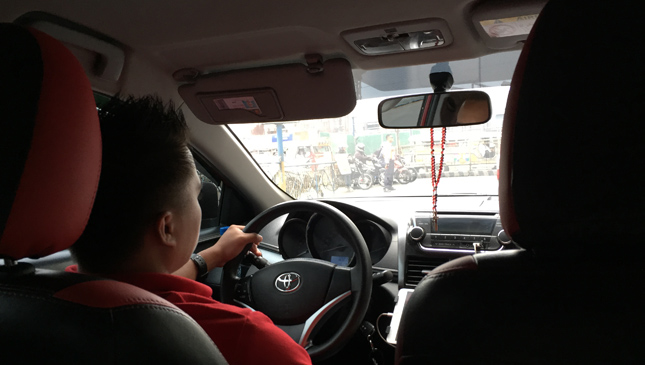
My sister and I went for a short visit to Cebu City last month. After two hectic days of errands and catching up with work deadlines, we finally went home. We hailed a taxi from Mandaue to Pier 3, and while we were on the road, the driver shared his thoughts about President Rodrigo Duterte and his policies. In this article, I will try to recall what he said as much as possible. He spoke in Cebuano, but for obvious reasons, this article will be in English. These opinions are not my own, so if you don’t agree with any of them, please don’t point the gun at me 🙂
On the war against drugs
Since Duterte took office, I could really see the difference the Philippines was going through. He is unlike other presidents we had before. He is decisive and although foul-mouthed sometimes, he means business and does not waste a moment to fulfill his promises to the Filipino people. Look at what he has done so far. The war on drugs is a necessary step in improving the state of the Philippines as a whole. I know that it is bloody, but the people could not possibly be surprised by that. From the get-go, he said that blood would be spilt when he does become president. This purge would not be an easy one, and it certainly would take some time, but at least he is doing something about it. When he says he’s going to do something, he does it immediately. Look at how fast he implemented the war against drugs. The moment he stepped into office, he took care of it. I could feel the streets are safer now. I have had experiences where I would have passengers late at night who are clearly high. When Duterte was elected, I have not had that experience. I even talk to some passengers who are still out in the wee hours, and they all said they never felt as safe as they do now because they knew the drug addicts are afraid to come out because of the Tokhang program.
Here’s the thing about the war on drugs that people don’t understand. Most Filipinos think that it is simply a way to cleanse the country of addicts, but it is more than that. Think about it. If the drug trade continues, it would ruin the lives of so many children who are supposed to be the leaders of the next generation. When this happens, the whole country will be in trouble. Also, people think that Duterte focuses too much on criminality and does not think much about the economy. What they don’t realize is that he’s trying to solve crimes first because he’s looking at the big picture. In order to improve the economy and attract investors, the country should be conducive to operating businesses. Who in their right mind would invest in a place where their business could be threatened by the high rates of criminality? The drug trade affects all aspects of the nation’s development. If we want to improve, we should nip this problem in the bud.
Comparing Duterte to Noynoy
The main difference between Duterte and Noynoy Aquino is that the latter is not a leader. He acted more like an administrator. He sees what his predecessors left him and worked on maintaining that rather than coming up with new ways that may move the country forward. Noynoy merely built on what already exists. Duterte, on the other hand, knows that the existing policies so far have done little to improve the state of the Philippines. So he implements new ones and those that have worked well in his beloved Davao. The Filipinos are naturally hard-headed. You can’t expect us to follow rules immediately just because we were told to do so. That’s why we need Duterte because he’s a leader that effectively enforces rules and punishes those who disobey. The problem with the previous administration is that there were laws in force, but they were not enforced properly.
On international relations
Duterte is one of the few presidents who publicly told the United States to fuck off. Most world leaders would not dare to do so because the America is a powerful and influential country that could cause trouble when provoked. However, Duterte knows that he has other allies and that the United States under the new leadership of Donald Trump is not as strong as it used to be. So he turned to the other powerful nations instead—China and Russia. Duterte knows how America functions. They meddle with international affairs and position their soldiers in critical areas to maintain control in the international realm. He knows we have had enough of being mere yes men to the Western power. He wants the Philippines to exhibit national sovereignty. That is why he does not pay much attention to the calls of the international community about human rights or any other issue thrown at him. He knows that even if the Philippines is still a developing country, we don’t need to be subjected to the demands of foreigners who have got to mind their own business.
Whenever I have foreign passengers, they don’t fail to tell me how much they like our president and how he is the best president of the Philippines so far. They congratulate me for having such a strong leader. Some even tell me that Duterte is the key to making the Philippines a great nation. See? Even the foreigners agree.
On the Boracay cleanup
Being the decisive president that he is, Duterte does not spend much time postponing things that obviously have to be done. Boracay is a tourist spot that needs to be preserved in order for it to continue bringing in money. If it is one day destroyed because of the neglect of the establishments there, the tourists will stop coming. We had been taught in school to take care of the environment, so I don’t get why people are complaining when the president is doing just that. They say it was too sudden and that it needs more time and planning. Sudden! People are calling the move sudden when it has been a glaring environmental problem for years. Boracay should have been cleaned a long time ago. The move is not sudden. In fact, it’s late! Look at what they had discovered in the island. There are pipes leading immediately to the ocean. What Duterte wants is to respond to the problem immediately. If we are going to wait longer, the problem will become bigger and the effects harder to counteract. They argue that the businesses will suffer. Of course they should! They caused the problem in the first place. Six months with no business a small price to pay for the damage they had done to a national treasure. Duterte was right in implementing the clean-up immediately.
Our conversation was cut short by our arrival at the pier. There were other things the driver said that I have not included in this article, but this should suffice for now. How do you feel about his opinions? Share your thoughts in the comments section.

Is PLDT Fibr Worth It?


Your report is due tomorrow. You still have a lot of things to research on the Internet, and suddenly, it takes 2 minutes for a web page to load. You keep on refreshing the website to no avail. Annoyed and frustrated, you open your Facebook account to rant about the slow connection, but even that proves to be a struggle since that site would refuse to load too. We’ve all been there. Ours is a world that depends on the Internet for so many things that it becomes a necessity for some. In my case, I am an academic writer, and my job requires me to stay connected. If the pages take too long to load, it would take me forever to finish my projects. So my frustration over slow Internet connections has reached a whole new level.
Last month, we decided to upgrade our connection to PLDT Fibr. The promised speed is 18 to 20 mpbs, and we had to pay Php1000 more compared to our old plan. One month had passed, and here is my experience so far.
The pages don’t load as fast as I expected them to. I really didn’t feel that much difference with our old plan and with the Fibr. However, the real win with the upgrade is the download speed. It takes just a few minutes for 1 GB+ files to download, which still amazes me to this day.
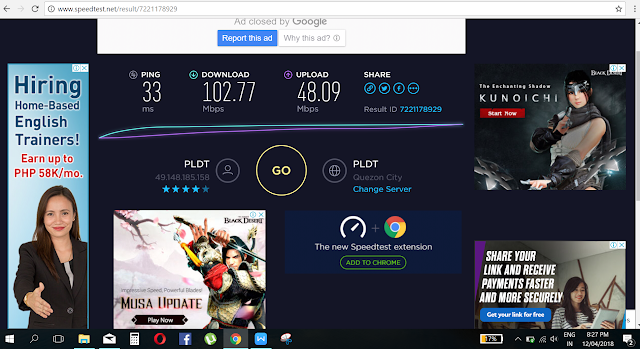
As expected, the connection speed is not consistent, and sometimes it would be so slow that you’d think it was a bad idea to upgrade. It’s only been a month, and I had already called the PLDT hotline to complain about the connection. I constantly run speed tests to ensure that I am getting the value of what I’m paying for. The connection would sometimes be so fast.
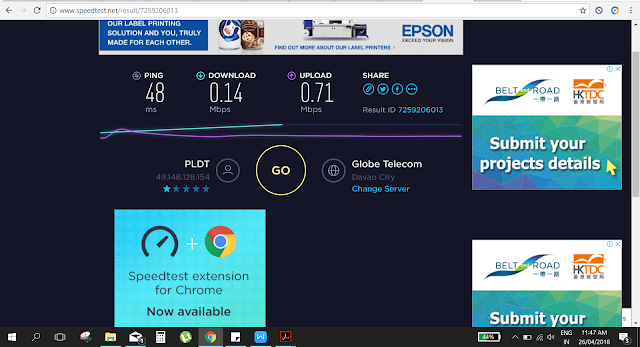
But then again, there are days when you get this.
I made sure to run these tests when I’m the only one connected to the Internet to get a fair result. So you see, even when only one gadget is connected, the speed can be really slow.
So is the upgrade worth it? Overall, I’d say yes because I need a faster Internet speed for my online job. The connection is not consistently stable, but I guess that’s expected from this company. Lately, I’ve been seeing a lot of rants on Facebook by people complaining about their connection problems. I hope there was a way to keep the speed consistent. After all, the monthly bills don’t change, do they?

My Experience as a K-Pop Fan and Why I’m Not One Anymore

Source: https://aminoapps.com/c/k-pop


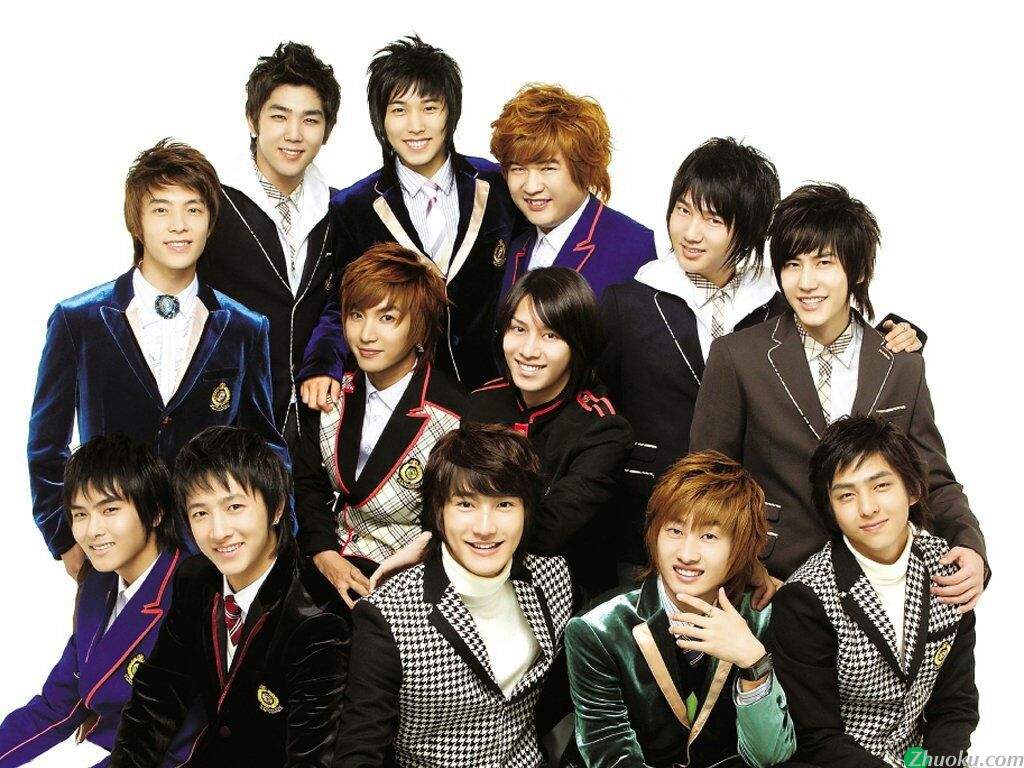
It all started one summer when the news about a Filipina singer impressing Koreans reached me. Charice Pempengco, now Jake Zyrus, performed a breathtaking rendition of Jennifer Hudson’s “And I Am Telling You I’m Not Going” at the Korean show Star King. The audience was blown way by Charice’s talent. One group was sitting on the benches at the side of the stage, and after the song, a member of that group was picked to sing “A Whole New World” with Charice. This was Kyuhyun, and the group he was with is the famous Super Junior. I fell in love with his voice and started searching online about the group. The first video I saw was “U,” and I liked the beat and found all the guys really cute. I looked for more music videos and listened to all of them, even memorizing the lyrics in the process. When I ran out of music videos, I looked for reality shows, interviews, and really anything where I could see them. Without realizing it, I spent my time being sucked by the Internet. Since this happened during summer vacation, I had all the time in the world.
I remember sleeping as late as 3 AM and waking up at 5 in the morning just to see SuJu. When it was time to eat, I would bring my food to the computer table and consume it there. When my parents told me I couldn’t do that anymore, I would turn the volume up and have their songs playing in the background while I ate. I murdered the replay button on all of their music videos. I memorized their birthdays, hobbies, and idiosyncrasies. The official fan club called ELF (Ever Lasting Friends) had millions of fans like me who are crazy about the group, and I reached out to some members just so I could find people to talk to about Super Junior.
Needless to say, I was hooked. This went on for the rest of the summer vacation, and in just about sixty days, I gained around 10 kg and managed to waste two months fangirling about thirteen Korean guys over the Web. It was bad. I had to get glasses because my vision was starting to blur with all the screen-sucking and insufficient sleep. I was a bookworm, but reading was not the reason why I had to visit an ophthalmologist. Fortunately, I was so competitive in school that I still chose academics over K-pop. I slowly recovered from my addiction, finding myself able to spend longer times without seeing them or listening to their songs. That was my first, and, as of now, last experience with K-pop fangirling.
It was an interesting time because it felt like my world revolved around them. I would get so jealous if one of the members was rumored to already have a girlfriend. I imagined my future with them and would laugh at their silliness and celebrate their achievements as if they were my own. The experience taught me just how influential K-pop groups can be. I could feel the sincere support of every ELF member. They would make sure that their idols felt welcomed in every concert and public appearance. It was nice while it lasted, but I was fangirling too much that I neglected my health and my responsibilities. I basically dedicated all my days to them. Even when I was sleeping, I would dream about them. It was an unhealthy practice. From then on, I would see to it that I wouldn’t fangirl anymore. I still appreciate K-pop music, but I made sure I didn’t get too attached to the singers. I don’t even want to know their names. I now listen to Korean songs sans the music videos because that might trigger my curiosity again and repeat the events of that summer vacation.
Although I’ve already moved on from my fangirling phase, I had influenced my sister regarding K-pop so much that now, she’s still head over heels for her favorite group, BTS. She’s a proud (and sometimes annoying) ARMY—that’s what BTS fans are called. She visits Twitter daily to get updates and memes, and we would often find her laughing at some cutesy video of the members smiling, laughing, and even sneezing. She would get at least one stop-mooning-over-guys-who-don’t-know-you look every day.
My sister is a “mild” fan, but there are some who are so dedicated that they sacrifice a lot for their idols. I jokingly told my friend once that I would post a comment on every EXO video that says they suck. (I don’t hate them, btw.) She expressed her advanced condolences because she knew that there are millions of EXO fans out there getting ready to pounce on me. I believed her. I was an avid fan before, and if I see a negative comment about my boys, I will gladly drop everything and shame the hater as best as I can. Fans are always ready for war when their idols are in question.
Fangirling over K-pop groups is no doubt a fun and enjoyable experience. The Internet is flooding with their performances, interviews, and reality shows. However, there is such a thing as reaching an unhealthy limit. It is okay to admire, but there’s a fine line between that and obsession. Let’s try not to cross it.
I learned a lot from my fangirling moments, and the most valuable lesson is definitely the things I got to know about Korea, its people, history, and culture. Before becoming a K-pop fan, I couldn’t even locate Korea on the map. But because I wanted to know more about my future husband’s country *aherm* I had to do my research. So it wasn’t a fruitless experience after all. I added to my knowledge regarding history, and I got to stare at cute boys who have amazing voices and whose smiles make you say “I do.”

Full-Time vs. Freelance: Which Is Better?

To better understand what I’m going to tell you, here’s a little background. I used to work for a publishing company in Cebu City, but I had to resign to go back to my village (of Konoha?) to pursue my studies in law. However, I’ve decided to drop out of my previous law school to transfer to another university, allowing me a long time to watch Naruto, a show I had started when I was still in the fifth grade. While waiting for classes to start and in between episodes, I’m working as a freelance academic writer online to feel like I have something to look forward to every day other than Naruto’s installment as the seventh Hokage. This article describes my experiences in both full-time and part-time jobs.
With my full-time job, I had worked fixed hours for a fixed salary with some bonuses here and there. This was both an advantage and a disadvantage depending on how you look at it. It was advantageous because you are sure to have a paycheck at the end of two weeks, and you know how much you are going to get so you can budget accordingly. However, the disadvantage is that aside from a few bonuses, there really is no other means for you to increase your income unless you have side hustles. That’s basically the problem in general for jobs with no commissions. However, keep in mind that some full-time jobs offer commission-based earnings on top of the basic salary.
In terms of leaves and vacations, there were strict rules in our company that required us to plan our vacations two weeks in advance. This is understandable because the manager needs to know how many people are going to be present on a particular day so she can assign the projects accordingly. Our department was relatively small, with only around eighteen people, so we were not allowed to take leaves together. If many of you and your coworkers are planning to take a leave of absence on the same date, you have to be the first to tell the manager that or you’ll just have to push your vacation to a later date.
In addition, there is also the pressure of being late. I cannot count how many times I had to run a mini-marathon to the sixth floor just to punch in on time. It was during these times that I wish I had ninja training. There were only two biometric scanners in the office for signing in, and if there’s a long line, you can say goodbye to your attendance bonus because no matter how you look at it, 9:00 is not the same as 9:01.
Aside from the time and salary limitations that are common to full-time jobs, my company had offered me a wonderful family and a fun environment that made routine work less tedious. I was lucky enough to be in a company that offered entertaining activities to the employees. There were always events, games, and competitions that allowed short breaks from the job.
On the other hand, freelancing allows me to have control of my time and income. I could choose which projects I want to take and the days that I want to work. If, for example, I suddenly want to go on a week-long vacation, I may do so. The best thing about being a freelancer is that you may take as many breaks as you need while working. I actually take naps in the middle of projects to allow my eyes to rest after hours of staring at a computer screen and also to gain a fresh perspective afterward. I’m the kind of person who is more efficient after a thirty-minute shut-eye, so this works for my benefit.
However, freelancing does require a lot of self-discipline to produce high-quality work and meet the deadline. There are no more bosses to remind and reprimand you for not working, but you have to stay disciplined to allocate hours in the day for your projects. You may do them last minute, but the stress is just too much if you allow that to happen. Believe me. I had spent restless nights always thinking about projects that I haven’t yet finished yet and wondering if I had enough time to do them properly. Aside from self-discipline, it is also important to be able to gauge the projects accordingly. You have to know which ones are doable with the given deadline and if they are worth the money you are paid for.
Freelancers need to use planners whether digital or not. Unlike full-time jobs where your work is usually the same every day, part-time jobs offer a variety of tasks for different jobs. Freelancers usually work for different clients and have different deadlines for different projects. You may choose not to work for three days straight, but you might also have three projects due on a single day. Thus, it is imperative to plan and schedule in advance and actually stick to the schedule.
In terms of perks and bonuses, freelance jobs do not take care of employee benefits such as social security and government care payments. You have to pay them yourself. Another benefit present in most full-time jobs but not in freelance is the health insurance. My previous company had a wonderful health insurance policy that many employees continue working there for the sake of the insurance alone. It is no question that health problems could equal to huge medical bills that may drain your life savings. A way for freelancers to prepare for such events is to get an insurance policy themselves. This means that freelancers need to plan their finances well as they are ultimately the ones responsible for many of the bill payments.
Both full-time and freelance jobs have their pros and cons when it comes to schedule, environment, and income. These jobs vary significantly, and each factor should be considered. You have to work according to your preference and considering your overall happiness. Choose a job that not only meets your desired income but also allows you to live a meaningful and fulfilling life. If none of these works out, you could always choose to be a shinobi. Something to think about. I know I will.

The Disadvantages of Having Reading Goals

A few years ago, I discovered Booktube. It was then that I found out some people are able to read more than ten books per month. It helped me get more motivated to read, and it also introduced me to Goodreads, a site where you can read synopses, review books, and track the books you’ve already read or would want to read. The site has a feature called the Reading Challenge where you can set the number of books you want to read for the year and update which books you have read as you go along.
Reading goals may vary. There are goals to read more of a particular genre, a subject, an author, or read a minimum number of books. Some people make it a goal to read more books that illustrate character diversity. Others may want to read more classics. For the purposes of this article, however, let us narrow down “reading goals” to mean the number of books you read.
I used this method for two years, and it has dramatically increased my reading number. I used to be a really slow reader. I did this on purpose especially when I was still in high school because there were no bookstores in my area that sold latest releases. There were a few secondhand bookstores and a few that sold academic books, but that was about it. I got new books only when my father had business meetings in other cities. I had to read them slowly so they would last me longer. I remember being so excited to read Draculaand I did not want to put it down, but I willed myself to do so because once I finish it, I wouldn’t have anything exciting to read for a few more weeks. Sure I could reread, but then the surprises are no longer there.
That was how I read for many years. I did not care about the number as long as I enjoyed them. When I was introduced to tracking and reading goals, I became so hooked that I would purchase as many as ten books in one go so I could have options. I had to get new glasses because of too much eye strain. I pushed myself to read more than I was used to just to reach my desired number. This exercise allowed me to explore more genres and authors. It instilled the in me the habit of reading consistently.
However, I have found some disadvantages in applying this method. Even though I was reading a lot, I have little to no time to really appreciate and absorb the information from what I’m reading. There were even times when I would go out to look for a really short book just to meet my weekly goals. It didn’t matter much if I was getting anything out of the experience as long as I got the numbers. I would avoid thick books as much as I can although I knew some of those books are highly acclaimed and I knew I could learn much from them.
For a while, it became more about the quantity than the quality. I did read a lot of good books, but I was not appreciating them as much. What I used to do before was after reading a book, I would go back to my favorite parts, reread them, then search online for discussion groups and articles pertaining to it. I remember learning so much about slavery when I read Uncle Tom’s Cabin because I dug deeper about that period after finishing the book. I was still emotionally affected by the fate of the characters that all those research made me sympathize with them more.
It took me some time to move on from a book because I didn’t only read it for the story. I was also learning a lot from outside sources. When I was setting reading goals, however, I had to jump from one book immediately to another. I did not conduct further research to understand where the author was coming from. I did not take time to appreciate the impact of the books to me. It was as if reading has become a purely mechanical activity, where I just had to run my eyes over the words. There is the concept of speedreading, but I have, unfortunately, not mastered it yet. I still need to stop and think about new ideas that I encounter in books to understand them fully.
Having reading goals is helpful when it comes to establishing a habit of reading consistently. But reading has benefits that the reader may not achieve when going through the materials too fast. Those numbers are meaningless when you’ve learned nothing in the end.

Design a site like this with WordPress.com
Get started