Cognitive Changes That Occur When You Study Law

The minute you step into law school, you enter a whole new world. No matter how many books you’ve read or how many videos you’ve researched online, you still won’t be ready for the fresh hell that is to come.
The minute your professor gives you those first thirty-six cases to read and digest, you’ll doubt whether you’ll survive the next four years. The first weeks will feel like two years of stress crammed into one as you try your hardest to speed-read through the mountain of Supreme Court jurisprudence. Those thick textbooks that are around a thousand pages each call to you every night, even after you turn off the lights. You will hate yourself for sleeping for thirty minutes longer than you intended because you could have digested a case during that time.
Yes, law school feels like Calvary sometimes. The plethora of required readings will stress out even the most organized student every once in a while. You are suddenly immersed in this new field, hoping you don’t drown in the process. You are very quickly seeing things in a new perspective as you try to think like a lawyer.
The biggest change when you gain more knowledge about the details of the law is when you see its application everywhere. You tend to analyze the legal aspect of everything. You start assessing people’s actions based on their legality. Even watching movies becomes a lot more complicated. I once watched a movie that I had seen about five times before. It was Paano Ang Puso Ko? starring Rico Yan, Judy Ann Santos, and Wowie de Guzman. It was just a good romantic film to me before, but after watching it again as a law student, I found myself analyzing it. There was a scene where Wowie punched Rico, not knowing that the latter was suffering from an illness. He did it to avenge Judy Ann, whom Rico hurt. From that scene, I was formulating legal questions in my mind. Can Wowie be held criminally liable for punching Ryan? If Ryan had died after taking the punch, what crime would Wowie have committed? When you have a good understanding of the legal system, legal issues show up everywhere, even in the simplest things.
Another change is that the news makes more sense. Those Senate hearings and discussions about the law and how it applies to situations are suddenly entertaining to you. You also begin to understand people with unpopular opinions more. For example, I read the case of People v. Turner online. Sympathizers of the victim were outraged because of the unfair decision of the judge. The defendant, Brock Turner, was a student at Stanford University. He was seen sexually assaulting an unconscious woman after a party. The prosecution asked for six years in prison, but the presiding judge, Aaron Persky, sentenced him to only six months in county jail and three years of probation.
People petitioned for a recall of the said judge, saying he does not deserve to be on the bench. However, the Commission of Judicial Performance found no judicial misconduct on Persky’s side. His sentence was within the recommended range, and if the prosecution believes it was an unjust ruling, they should appeal the case to a higher court. Recalling the judge is not the remedy in this case because such efforts threaten the judicial independence of judges, which is essential in upholding the rule of law. Most people do not understand this or its importance. If a judge could be bullied off his bench because of an unpopular decision, then the justice system crumbles. I personally do not agree with his ruling, but he may have seen something in the facts of the case that we have not. A lot can happen in court. Lawyers could be very persuasive—it’s part of the job. Nevertheless, the case is still not over as of the writing of this article. However, the fact remains that Judge Persky is not guilty of illegal or unethical conduct.

Because law affects anything and everything that goes on in society, you can see its application everywhere. If you’re a law student or a lawyer, you’re trained to see the world from a legal standpoint. It’s inevitable to think legally about everything.

In the first law school-related seminar I attended, Atty. Joan de Venecia told us that after you step into the legal world, law becomes a part of you. You can’t stop thinking about it even after you leave the office or the courtroom.
Even after just a few months into law school, you will be wearing a different set of glasses. These glasses then become a permanent part of you. I just hope this new way of seeing doesn’t cause blindness.

Bye-Bye, Baker Street Boys

Source: https://www.youtube.com/watch?v=7hjPxUfV32Q


After waiting long for season 4 of BBC’s Sherlock, fans of the show are disappointed to hear that we won’t be seeing our favorite duo anytime soon. So while waiting for the go signal from the creative minds behind the TV series, I thought it would be nice to reminisce.
I discovered the stories of Sherlock Holmes through the Japanese animated series Detective Conan. I wanted to know the famous detective that Shinichi was based on. After purchasing my first copy of Sir Arthur Conan Doyle’s masterpiece, I was hooked.
Sherlock is famous for his deductions. His power of observation is second to none. He was portrayed by Doyle as a rational man, almost incapable of emotions. He differs from other detectives in that he solves most of his cases without waiting for the perpetrator to make mistakes. His thinking process is unparalleled in the fictional world.
Since its release in 1887, many people have been amused by the detective from 221B Baker Street. The place, unlike the stories and characters, is real. However, the address was nonexistent at the time Sir Arthur Conan Doyle wrote the series.

Sir Arthur Conan Doyle
Image Source: http://www.arthurconandoyle.com/

Various film adaptations had been made, with the recent ones portraying Sherlock as more human than what most people perceive him to be. The 2009 movie starred by Robert Downey Jr., for example, shows the seemingly cold-hearted detective as one capable of being affected by emotions.
But of all the past adaptations, nothing beats BBC’s Sherlock, in my opinion. Each episode boasts incredible video editing, especially during the moments when Sherlock makes observations and explains his deductions. And of course, the acting skills of the talented Benedict Cumberbatch are what makes the show legendary. His on-screen chemistry with co-star Martin Freeman is undeniable.
As the series progresses, our favorite consulting detective is seen to transform from uncaring to being a protective and loving friend. The biggest thing I will miss from the show is the brotherhood between John and Sherlock. There’s something about their bromance that tells viewers of their special relationship, one that cannot be broken by anything or anyone. No one abandons the other, and both try to stand each other’s flaws despite it being very annoying. (And yes, if you ask John Watson, it here means Sherlock.)
Perhaps my favorite episode was “The Sign of Three” specifically the part where Sherlock makes his best man toast. It was during this scene when John told Sherlock that he was his best friend. It was also in this episode when Sherlock made the vow to be by Mary and John’s side no matter what.
Other actors of the show greatly added to its overall awesomeness. Andrew Scott’s epic portrayal of Jim Moriarty gives viewers this ineffable feeling of liking and despising him at the same time. His coolness and love of the game makes it harder for us to hate him despite the fact that he causes our heroes to squirm from time to time.
Mark Gatiss also portrayed Mycroft Holmes well. He was nonchalant for the most part, but I think his acting skills shone during the last episode, where we were able to see a weaker and more vulnerable side of the eldest Holmes sibling. Speaking of sibling, Sian Brooke, who played Eurus Holmes is one of my favorites of the show. Yes, she was devious and crazy and maybe even evil. But I somehow relate to her character for reasons I do not know. Please don’t judge me.

My only problem with the show is that I couldn’t watch it without subtitles. It’s not just the British accent that confuses me. It’s also how fast Sherlock explains his deductions. My brain is not wired to understand complicated information that fast. Also, half of my being is busy swooning over Benedict to actually pay attention to what he’s saying. No shame here. I know 90 percent of you do the same.
As we (impatiently) wait for further announcements, we grab our popcorn and repeatedly watch past episodes. The wait may be long, but wait we will. BBC might have suspended the show, but in the hearts of the fans, we’re still going on adventures with the Baker Street Boys.

How to Move on from Relationships

You’re at a party and you’re bored out of your wits. In your mind, you’re already in bed with that exciting new paperback and a glass of red wine. Then a mutual friend introduces you to this cute guy. As you talk, you discover you have so much in common, and he makes you laugh like nobody else does. Suddenly, you’re aware of that strand of hair that isn’t tucked away neatly. You begin to worry he’s going to notice that you smell, then you silently chastise yourself for not going to the nail salon that morning. You’re happy. Fast forward three years and he no longer brings you flowers. You’re constantly fighting about the pettiest things. You’re annoyed with his little quirks that you used to adore. He likes spending more time with his friends than with you. Then the inevitable happens: You break up.
Heartache is a lot to handle especially for those who have grown too accustomed to being with their partners. They say time heals a broken heart, but how much time does it take? Is there any way to recover faster?
I’m not in any way an expert in this subject, but here are my suggestions for easing the pain.
Prevention is key.
Before even going into a relationship, you have to make sure that you’re okay with just being you and being single. Most people are looking for that person to fill some hole in their lives. This is a recipe for disaster. You can’t expect people to stay forever. If you treat someone temporary as if he’s there to stay, it will be harder to move on. You can never tell how much a person is willing to hold on to you even when it seems like everything is falling into place. Most importantly, it will be harder for you to appreciate what you already have in you.
So before you decide to commit, make sure you’re committed to yourself enough to be happy with just being you because let’s face it. You’re awesome.
Concentrate on your growth.
It’s important to grow as a couple, but this makes it easy to forget to grow as yourself. One of the hardest pills to swallow when you break up is that you don’t get to do the usual things you did regularly. You’re then reminded of your partner every time you go to the park because you always had your picnics there. It’s hard not to cry when you go to the office because he used to accompany you every day. Maybe it’s even harder to shower now because you used to do that together too (no judgments here . . . perhaps just a little envy).
This is why it’s more difficult to move on. You did almost everything together. The solution? Spend more time alone while you’re in the relationship. Take cooking classes without your boyfriend. If you’re a guy, attend the gym alone or with your buddies instead of doing it with your girlfriend. Find something that can make you grow as a person without having your partner there because whether or not you’re in a romantic relationship, you have a relationship with yourself and you owe it to you to be better every day.
Don’t procrastinate.
Take advantage of the productivity rule of not procrastinating. Not moving on when you have to is basically like putting off something that you need to do now to be better. And we all know how bad it makes us feel if we don’t do the things we need to do right away.
Let’s be real here. You’re going to move on anyway. It might be two weeks from the breakup or maybe even two years. The point is, if you know it won’t work and you’re not getting back together, why don’t you move on now? It still might hurt, but we have to let go of the things that don’t add value to our lives. The more you hold on, the worse you will feel. Just think of it as a good story you’re going to tell your grandkids someday when you finally find that one person who’s worth your time. Remember that you broke up for a reason. Acknowledge that you had an awesome thing going while it lasted, but think rationally about the situation.
As Mark Twain said, “If you have to eat a live frog at all, it doesn’t pay to sit and look at it for very long.”
OoO
Maybe you’re rolling your eyes as you’re reading these tips. Moving on from a relationship, especially if it was really special or if it lasted for quite a while, is easier said than done. I don’t intend to dismiss the validity of the pain you’re feeling when you’re brokenhearted. It’s hard. The broken heart can be healed with time, but having that sadness weigh in on your life for much longer than needed will take its toll on the other areas that matter.
Think about it this way. Successful people don’t just wait. They do something to be the person they want to be. You want to move on? Be intentional about it. Do what you need in order to be happier now that the relationship is over. And don’t forget to pray. God is a greater healer than time. And when you have God in your heart, you are never truly alone.

Things I Learned from The Emperor: Owner of the Mask

 A few weeks ago, my sister, who is a fan of K-pop and Korean series, suggested that I watch a Korean historical drama. She promised me it would not be cheesy and that it deals more on political issues rather than the love story. Although I like watching romantic comedies, nothing really ever beats those productions that portray real and relevant societal issues. So I decided to give it a go.
Owner of the Maskis set during the Joseon dynasty, particularly in the 1700s. Before the Crown Prince was born, his father made a deal with an organization called Pyunsoo hwe in order to become king. The group helped assassinate the rightful heir to the throne. In exchange, the new king had to be a puppet of the group. When Crown Prince Lee Sun was born, he was poisoned. The leader of Pyunsoo hwe had the antidote, but in order to get it, the king had to promise to create a bureau that will privatize water all over Joseon.
After that, the prince was made to wear a mask so that the people will not recognize him. The king ordered this to protect his son from Pyunsoo hwe. When the Crown Prince became a teenager, he went outside the palace to discover the dark history of his father and ended up knowing the problems of the people. The series is about his quest to liberate Joseon from the corrupt organization and to finally be free of his mask.
The series was filled with surprising plot twists, betrayal, and politics, and it makes you think about society and the forces that motivate people to do good and evil.
Here are some of the things I learned from the show. There are spoilers here, so if you want to watch the show first, do so.
A life lived with purpose is a life well-lived.
There’s a reason why I’m drawn to the royal bodyguards in Korean dramas. They are willing to risk their lives and the lives of their families in order to serve and protect their masters. They are people who are always true to their word.
In Owner of the Mask, Lee Chung Woon is the Crown Prince’s bodyguard. On the night that the king was assassinated, Chung Woon chose to protect the prince, leaving his father to fend for himself. He knew that his father would die that night, but he pushed through with his duties because he knew it was the purpose of his existence. Throughout the series, he was never disloyal to his master. He has a role to play for the future of the country, and for that, he was willing to die.
True love doesn’t wait for rewards or acknowledgment.
My favorite character in the series is definitely Kim Hwa-gun, the granddaughter of the leader of Pyunsoo hwe. She was supposed to follow her grandfather’s footsteps, but she chose to defy her family for the love of her life. She risked and lost her life to burn down the root of the power of her grandfather’s organization. She died happy, knowing she was able to live her life protecting and helping the man she loves.
She didn’t even ask to be loved back. She told the prince he could marry the woman he chooses. All she wanted was to be by his side as he is trying to make the nation great. (If that isn’t martyrdom, I don’t know what is.) She is a rational, smart, and cunning woman who gave up everything in the name of love.
Sensible men look deeper when it comes to choosing life partners.
Here’s a fact. There are lots of beautiful women in the world. No matter how pretty you are, there will always be someone prettier. But not all are practical and kindhearted and smart. A foolish man will wish for a trophy wife, a beautiful woman he can show off to his friends. But wise men look for women who can think for themselves and who can support him and the family during hard times. These women are tough and are not easily broken when troubles come.
In the series, the Crown Prince fell in love with Han Ga Eun, the daughter of the deputy magistrate. Although she was well-off, Ga Eun respected the commoners and went under the tutelage of Master Woo Boo to learn medicine. She was a strong woman who had a heart for the people. Even after losing her father and witnessing the execution herself, she still managed to be the rock of a whole town forced to go to the wilderness to starve. Through her leadership, the townspeople were able to lead normal lives and trade with other localities despite starting with barely nothing. This kind of woman fits to be ruling beside a just king.
The world can make you a monster.
Dae Mok, the leader of Pyunsoo hwe and the main villain of the story, wasn’t always the evil person who caused thousands to suffer. He was one of those people who had enough of the injustices. He got tired of being powerless, so he did everything he could to change that. Along the way, he forgot who he was and why he was gaining power in the first place. In the quest to defeat the monsters of society, he became a monster himself.
When the Crown Prince captured Dae Mok, I didn’t expect the former to apologize. He asked for forgiveness because the world was of such circumstance that made him corrupted. We came into this world knowing nothing. The realities that we face change us, depending on how we react to the challenges life throws at us. Some emerge better. Others don’t fare so well. Everyone faces different problems and experience different things. That’s why even the most evil villain could have an excuse.
A good leader can make a nation great.
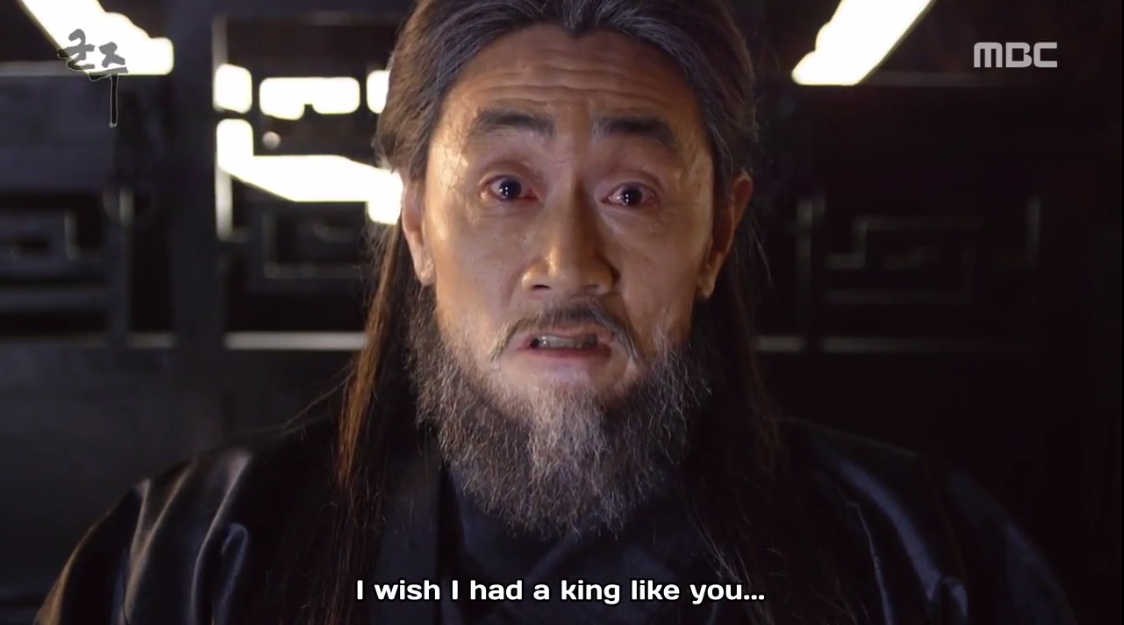
After the prince apologized to Dae Mok, he uttered what to me was the most painful sentence in the series. While he was waiting for the poison to kill him, he told the Crown Prince (who was already the king then) the following words: I wish I had a king like you a little sooner.

If the country were not full of corrupted officials back then, Dae Mok wouldn’t want revenge. He wouldn’t have caused the people to suffer. He would perhaps be living a happy life that was in service to the welfare of his country.
Time and again, history has told us stories of great rulers who made their nations prosperous. A sound leader who has the heart to serve inspires the people to achieve greatness. From such a leader, the laws would benefit the majority, and the punishments would be just.
Crown Prince Lee Sun was such a leader. After reclaiming the throne and ending Pyunsoo hwe, he forgave his enemies and gave them a chance to be better citizens. The people of Joseon saw in him the hope for a better future.
OoO
Overall, Emperor: Owner of the Mask was a good drama to watch, even though it has forty episodes. If you’re into historical drama that is bombarded with political intrigue and a little bit of science, you may want to give this a go.
If you’ve seen the series, comment below who your favorite character is and why 😊

Notes on Justice Cruz’s Constitutional Law (Chapter 3)

  • The judiciary is considered the ultimate guardian of the Constitution. This particular branch of government is responsible for judging the constitutionality of a statute.
  • The courts are passive instruments that can act only when their jurisdiction is invoked.
What provision of the Constitution dictates how the Supreme Court can declare a law unconstitutional?
The voting for the determination of constitutionality is provided by Article VIII, Section 4 of the 1987 Constitution.
What items are covered by Article VIII, Section 4?
  1. Treaty
  2. International agreement
  3. Executive agreement
  4. Law
  5. Presidential decree
  6. Proclamation
  7. Order
  8. Instructions
  9. Ordinance
  10. Other regulations
How many votes (by the members of the SC) are needed to declare a law unconstitutional?
Commonwealth Constitution: two-thirds of the Supreme Court
1973 Constitution: 10
1987 Constitution: a majority of the members who actually took part in the deliberations on the issues in the case and voted thereon
What is the least number of members of the Supreme Court that may declare a law unconstitutional?
Five. This is the majority of the quorum of eight of the fifteen-membered Court.
What are the requisites of judicial inquiry?
No constitutional question will be heard and decided unless the following are present:
  1. There must be an actual case or controversy.
  2. The question of constitutionality must be raised by the proper party.
  3. The constitutional question must be raised at the earliest possible opportunity.
  4. The decision of the constitutional question must be necessary to the determination of the case itself.
What does it mean to have an actual case?
  • An actual case or controversy involves a conflict of legal rights, an assertion of opposite legal claims susceptible of judicial resolution.
  • The case must not be moot or academic.
  • The must be a contrariety of legal rights that can be interpreted and enforced on the basis of existing law and jurisprudence.
Is a request for advisory opinion under the category of an actual case?
No. The issue raised here does not involve any conflict in law. It only seeks counseling by the courts, whose advice does not have the force of law.
Is a single violation of the Constitution enough to awaken judicial duty?
Yes, as declared by the Supreme Court in Pimentel v. Aguirre.
Are all cases considered moot and academic automatically disqualified for judicial review?
No. Courts may decide cases that are otherwise moot and academic if
  1. There is a grave violation of the Constitution
  2. The exceptional character of the situation and the paramount public interest is involved
  3. When the constitutional issue raised requires formulation of controlling principles to guide the bench, the bar, and the public
  4. The case is capable of repetition yet evading review
Who is a proper party to a case?
A proper party is one who has sustained or is in immediate danger of sustaining an injury as a result of the act complained of. Unless and until such actual or potential injury is established, the complainant cannot have the legal personality to raise the constitutional question.
Define locus standi.
Locus standiis a personal and substantial interest in a case such that the party has sustained or will sustain directinjury as a result of the governmental act that is being challenged.
May a taxpayer or a group of taxpayers question the validity of an appropriation law?
Yes. This was the ruling held by the Supreme Court since the Emergency Powers Cases, saying, ‘‘the transcendental importance to the public of these cases demands that they be settled promptly and definitely, brushing aside, if we must, technical procedure.’’
What are the requisites for a taxpayer’s suit to prosper?
In order for a taxpayer’s suit to prosper, the following requirements must be met:
  1. Public funds derived from taxation are disbursed by a political subdivision or instrumentality and in doing so, a law is violated or some irregularity is committed
  2. The petitioner is directly affected by the alleged act
When can a case be considered of transcendental importance?
A case can be accorded standing on the ground of transcendental importance if the following is established:
  1. The character of the funds (that it is public) or other assets involved in the case
  2. The presence of a clear case of disregard of a constitutional or statutory prohibition by the public respondent agency or instrumentality of the government
  3. The lack of any party with a more direct and specific interest in raising the questions being raised
When can a citizen raise a constitutional question?
A citizen can raise a constitutional question only when
  1. He can show that he has personally suffered some actual or threatened injury because of the allegedly illegal conduct of the government
  2. The injury is fairly traceable to the challenged action
  3. A favorable action will likely redress the injury
When can voters be considered proper parties with respect to implementation of election laws?
Voters may be considered as proper parties with respect to implementation of election laws when there is a showing of obvious interest in the validity of the election law in question.
What does raising the constitutionality question at the earliest possible opportunity mean?
It means that if the question is not raised during the pleadings, it cannot be considered at the trial, and, if not considered at the trial, it cannot be considered on appeal.
Can the question of constitutionality still be raised if not raised at the earliest possible opportunity?
Yes, for the following cases:
  1. In criminal cases, the constitutional question can be raised at any time in the discretion of the court.
  2. In civil cases, the constitutional question can be raised at any stage if it is necessary to the determination of the case itself.
  3. In every case, except where there is estoppel, the constitutional question may be raised at any stage if it involves the jurisdiction of the court.
What should the courts do when the issue of constitutionality is raised but there are other grounds where the controversy can be settled?
The courts should resolve the controversy based on other grounds other than the issue of constitutionality. This is because courts should presume that ‘‘the acts of the political departments are valid, absent a clear and unmistakable showing to the contrary.’’ This is for the courts to show respect to their coequal branch.
Can a person question the validity of a law under which he previously accepted benefits?
No. This constitutes estoppel.
What are the seven pillars of limitations of the power of judicial review?
The seven pillars of limitations of the power of judicial review, as written by US Supreme Court Justice Brandeis in Ashwander v. TVA are the following:
  1. The Court will not pass upon the constitutionality of legislation in a friendly, non-adversary proceeding, declining because to decide such questions ‘‘is legitimate only in the last resort and as a necessity in the determination of real, earnest, and vital controversy between individuals. It never was the thought that, by means of a friendly suit, a party beaten in the legislature could transfer to the courts an inquiry as to the constitutionality of a certain act.’’
  2. The Court will not ‘‘anticipate a question of constitutional law in advance of the necessity of deciding it.’’ . . . ‘‘It is not the habit of the Court to decide questions of a constitutional nature unless absolutely necessary to a decision of the case.’’
  3. The Court will not ‘‘formulate a rule of constitutional law broader than is required by the precise facts to which it is to be applied.’’
  4. The Court will not pass upon a constitutional question although properly presented by the record, if there is also present some other ground upon which the case may be disposed of. This rule has found most varied application. Thus, if a case can be decided on either of two grounds, one involving a constitutional question, the other a question of statutory construction or general law, the Court will decide only the latter. Appeals from the highest court of a state challenging its decision of a question under the Federal Constitution are frequently dismissed because the judgment can be sustained on an independent state ground.
  5. The Court will not pass upon the validity of a statute upon complaint of one who fails to show that he is injured by its operation. Among the many applications of this rule, none is more striking than the denial of the right of challenge to one who lacks a personal or property right. Thus, the challenge by a public official interested only in the performance of his official duty will not be entertained . . . In Fairchild v. Hughes, the court affirmed the dismissal of a suit brought by a citizen who sought to have the Nineteenth Amendment declared unconstitutional. In Massachussetts v. Mellon, the challenge of the federal Maternity Act was not entertained although made by the Commonwealth on behalf of all its citizens.
  6. The Court will not pass upon the constitutionality of a statute at the instance of one who has availed himself of its benefits.
  7. When the validity of an act of the Congress is drawn in question, and even if a serious doubt of constitutionality is raised, it is a cardinal principle that this Court will first ascertain whether a construction of the statute is fairly possible by which the question may be avoided.
What are the views on the effects of a declaration of the unconstitutionality of a statute, and how do they differ?
There are two views on the effects of a declaration of the unconstitutionality of a statute, namely the orthodox view and the modern view. Their difference is shown below.
Orthodox view
Under the orthodox view, an unconstitutional act is not a law; it confers no rights; it imposes no duties; it affords no protection; it creates no office; it is, in legal contemplation, inoperative, as if it had not been passed.
Modern view
Under the modern view, the court does not annul or repeal a statute if it finds it unconstitutional. It simply refuses to recognize it and determines the rights of the parties just as if such statute had no existence.
What is the operative fact doctrine?
The operative fact doctrine is a rule of equity. Under this doctrine, the law is recognized as unconstitutional but the effects of the unconstitutional law, prior to its declaration of nullity, may be left undisturbed as a matter of equity and fair play. It recognizes that the existence of a statute prior to a determination of unconstitutionality is an operative fact and may have consequences which cannot always be ignored.
What are the requirements for a statute to be considered partially constitutional?
A declaration of partial constitutionality will be valid only if two conditions concur:
  1. That the legislature is willing to retain the valid portions even if the rest of the statute is declared illegal
  2. That the valid portions can stand independently as a separate statute
How can the legislature express that they want to salvage the constitutional parts of a statute should a portion be considered unconstitutional?
The legislature’s willingness to retain the valid portions of a statute is expressed in the separability clause.

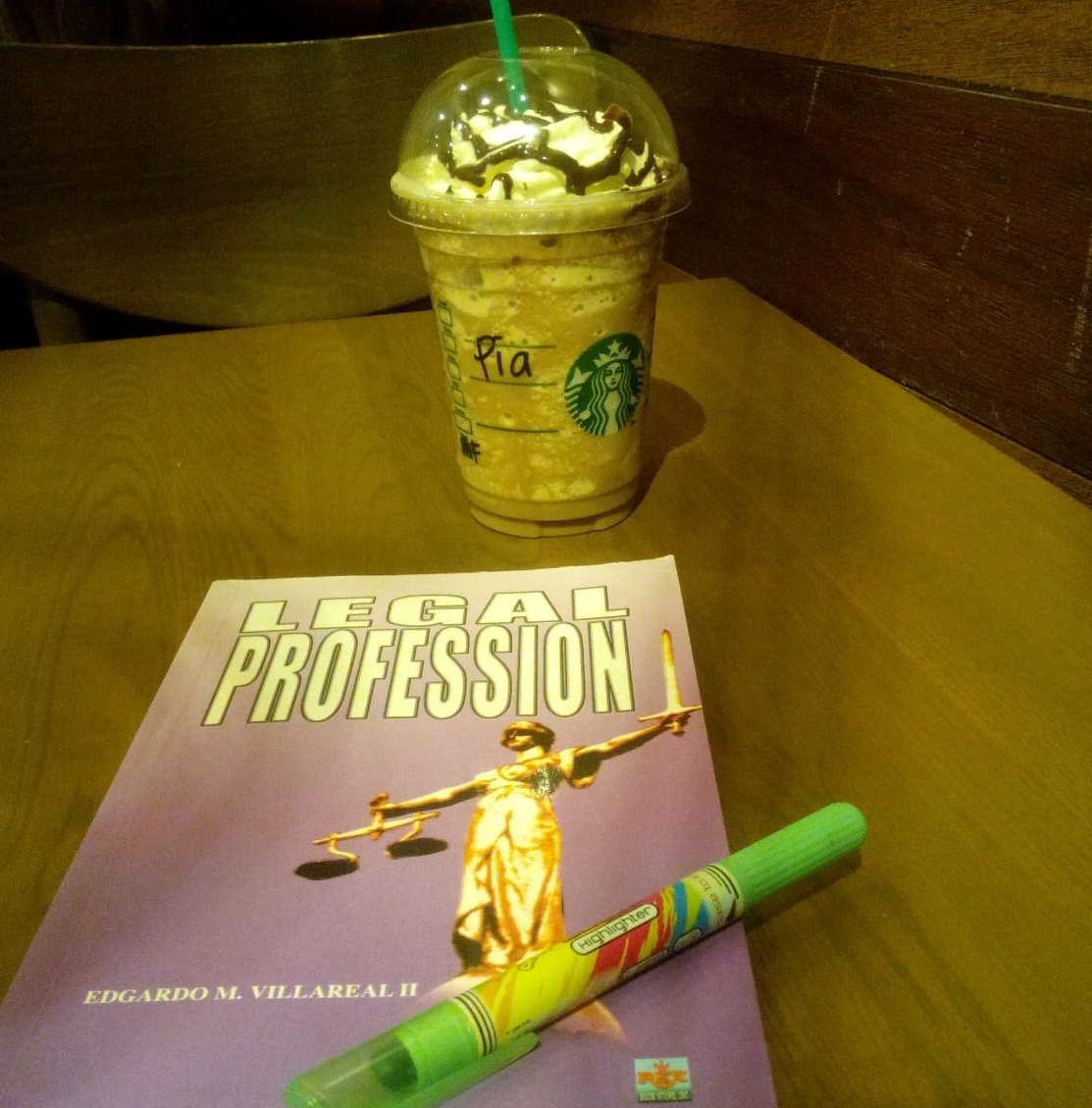
Highlighter vs. Pen: Which Is Better for Law Students?

Here’s the thing about most law students: we love our highlighters. We have the crayon type, erasable, pastel, neon, etc. No study session is complete (it might not even be started) without those colorful sticks on our desks. A lot of studies found out that highlighting is not an effective way of studying, but for law students, we have a special reason for choosing to color our study materials.
The most important reason is the large amount of information we have to study. Those textbooks that are around a thousand pages each contain a lot of things we need to understand and, most of the time, memorize. There isn’t much time to take down notes, especially for those who have jobs, so we need the most important information to pop out while we’re reviewing and/or cramming for the exams. Highlighting is also advantageous during the last year of law school when students have to study all the textbooks again. There’s not enough time to read them all cover to cover, so it’s good if there already are highlights.
Despite all these, I find that most of the time I’m studying while highlighting, I tend to go back a lot, and it would take me more time to finish a certain chapter. This is because my attention will be divided between trying to understand the material and steadying my hand to make the highlight straight. Not to mention the mental and physical work of switching between colors.
This week, I studied using only a pen, underlining or encircling important sections. My annotations were far from perfect. They’re not even clean. But I found that I was able to concentrate more on the textbook by doing so. I didn’t have to worry over perfecting my lines. I just scribbled away. Then I made notes on the chapters because I had enough time to do that, having gone through the material much faster.
I find that this method works better for me because it allows me to learn actively. Without having to switch tools, I can mark the important parts of the book and then write on a separate piece of paper those which I need to memorize.
I’m not sure if I’m going to study my textbooks using exclusively this method. I’m still going to continue highlighting cases, though. I don’t need to memorize those, and the facts need to pop out when I’m making the digests. For now, I’m going to continue using only pen or pencil. We’ll see how that goes in the long run.
Having said this, no matter what your preference is, at the end of the day, what you underlined or highlighted will not matter if you don’t understand a thing or are not able to apply it in the real world. Use whatever floats your boat. The goal here is learning, not making the textbooks look pretty. (But I can’t deny that’s fun to do.)

The Importance of Knowing the Value of What You’re Learning

When I was in high school, we were trained for a math competition. We were taught how to graph, and my teacher gave us a list of points that we had to locate and label. We were doing this for some time, but after a while, I had to stop and ask my teacher, “Why do we need to learn this? It’s just dotting points on paper.” She gave a short answer, basically telling me that we need to learn it in case we were asked to graph something. I wasn’t really satisfied with the response, and I was less than excited about graphing.

In school, we are taught to memorize a lot of facts and solve problems. For most students, their motivation for learning is grades. Why do you need to make a fifty-page paper on Pearl Harbor? Because if you don’t, you won’t get the grades, and you won’t graduate. This is a good source of motivation, but I believe there’s a better one—we learn in order to apply what we’ve learned to real-life problems. To do this, we need to first appreciate the material.

I think it’s important to discuss why we have to learn a certain topic before going into the technicalities. I hate it when teachers immediately delve into the equations without telling us what problems these clump of numbers and letters could potentially solve and what they could do for us someday. We were trained to just accept and learn stuff without appreciating their value. I don’t know about you, but I find it easier to study for something that I know will be useful to me someday. If you were given a weird-looking vase for your birthday, you might not appreciate it that much. But after doing a quick internet search and finding out that the vase was designed by some famous person and costs more than a month’s salary, I’m sure you’d display it proudly and talk about it when guests arrive. That’s because you now know its value. If you think about it, everything else follows the same principle. We appreciate people and things more if we know what they’re worth to us. We tend to give them more attention.

When we learn something new, especially something difficult, it would seem easier, or at least we will be more motivated to study it, if we know it’s important that we do so.

For example, I read every day not because I like running my eyes through the pages but because I know that reading enriches you as a person and that the written word is powerful enough to cause revolutions or incite rebellions. I know it’s important, so it’s not hard for me to do it. Some people think learning about history is boring, but I find it fascinating because I know that it’s a record of what humans have done in the past, what mistakes they made, and what things worked and didn’t work for them. This could be used as a reference to us in present times, to do what produces desirable results and to avoid the mistakes of our ancestors.

Learning can be tedious when you don’t like a lesson and you feel like you’re forced to learn new information just to get the grades. But it will be a different scene when you know the importance of what you’re studying and what it can do for you once you’ve mastered it. So the next time you’re dealing with a new topic in school, do your research first and learn why you need to study it. A person is more motivated to dig if he knows there’s gold ahead than when he’s merely told to just dig.

Notes on Justice Cruz’s Constitutional Law (Chapters 1-2)

Constitutional Law is the study of the maintenance of the proper balance between authority as represented by the three inherent powers of the State and libertyas guaranteed by the Bill of Rights.
Unjustified ascendency of authority over liberty results to tyranny.
Unwarranted primacy of liberty over authority results in anarchy.
Definitions of Constitution
  • The definition according to Cooley embodies both the written and unwritten Constitution:
A Constitution is “that body of rules and maxims in accordance with which the powers of sovereignty are habitually exercised.”
  • The definition provided by Justice Malcolm specifically defines written constitutions:
A Constitution is “the written instrument enacted by direct action of the people by which the fundamental powers of the government are 1established, 2limited, and 3defined, and by which those powers are distributed among the several departments for their safe and useful exercise for the benefit of the body politic.”
Purposes of the Constitution
  1. Prescribe the permanent framework of a system of government
  2. Assign to the several departments their respective powers and duties
  3. Establish certain first fixed principles on which government is founded
The Constitution does not create basic individual rights. It merely recognizes and protects them.
Supremacy of the Constitution
            The Constitution is the basic and paramount to which all laws must conform and to which all persons, including the highest officials of the land, must defer. No act shall be valid, no matter how noble its intentions, if it conflicts with the Constitution.
Classification of the Constitution
            Constitutions are classified into the following:
    • Written or unwritten
    • Evolved (cumulative) or enacted (conventional)
    • Rigid or flexible
Written
One whose precepts are embodied in one documents or set of documents
Unwritten
The rules are not integrated into a single, concrete form but are scattered in various sources
Evolved (Cumulative)
A result of political evolution and not inaugurated at any specific time but changing by accretion rather than by any systematic method
Enacted (Conventional)
Formally “struck off” at a definite time and place following a conscious or deliberate effort taken by a constituent body or ruler
Rigid
One that can be amended only by a formal and difficult process
Flexible
One that can be changed by ordinary legislation
            The Philippine Constitution is 1written, 2conventional, and 3rigid.
Essential Qualities of a Written Constitution
  • Broad
          It provides for the organization of the entire government
          Covers all persons and things within the territory of the State
          Embodies the past, reflects the present, and anticipates future
          Must be comprehensive enough to provide for every contingency
  • Brief
          So that it is more adjustable to change and easier to amend
  • Definite
          To avoid ambiguity that results in confusion and divisiveness among the people
Exception to the definite characteristic:
            When the rules are deliberately worded in a vague manner to make more malleable to judicial interpretation in the light of new conditions and circumstances
Essential Parts of the Written Constitution
1.      Constitution of liberty
o   Consists of prescriptions setting forth the fundamental civil and political rights of the citizens and imposing limitations on the powers of government as a means of securing the enjoyment of those rights
o   Found on the following articles:
§  II (Declaration of Principles and State Policies)
§  III (Bill of Rights)
§  IV (Citizenship)
§  V (Suffrage)
§  XII (National Economy and Patrimony)
2.      Constitution of government
o   Consists of a series of provisions
§  outlining the organization of the government
§  enumerating the government’s powers
§  laying down certain rules relative to its administration
§  defining the electorate
o   Found in the following articles:
§  VI (The Legislative Department)
§  VII (Executive Department)
§  VIII (Judicial Department)
§  IX (The Constitutional Commissions)
§  X (Local Government)
§  XI (Accountability of Public Officers)
3.      Constitution of sovereignty
o   Consists of provisions pointing out the mode or procedure in accordance with which formal changes in the fundamental law may be brought about
o   Found in Article XVII (Amendments or Revisions)
Permanence of the Constitution
Advantage
            A written, conventional, and rigid constitution resists capricious or whimsical changes. It is not likely to be easily tampered with to suit political expediency, personal ambitions, or ill-advised agitation for change.
Disadvantage
            It is unable to adjust to the need for change justified by new conditions and circumstances. The difficulty of amendment may delay needed change.
Interpretation of the Constitution
            In case of doubt, the Constitution should be considered s 1self-executing rather than non-self-executing, 2mandatory rather than directory, and 3prospective rather than retrospective.
Self-executing provision
Directly or indirectly applicable without need of statutory implementation
Non-self-executing provision
One that remains dormant unless it is activated by legislative implementation
Amendment vs. Revision
Amendment
  • Isolated or piecemeal change
  • A change that adds, reduces, or deletes without altering the basic principles
Revision
  • Rewriting of the whole instrument
  • Alters basic principles in the Constitution
  • Alters the substantial entirety of the Constitution
Steps in Revision or Amendment
            There are two steps involved in the amendment or revision of the Constitution:
1.      Proposal
2.      Ratification
Proposal
            A proposal can be made through the following:
1.      Directly by the Congress
2.      Through a constitutional convention
3.      Directly by the people through initiative (for amendments only; not applicable to revisions)
Made directly through the Congress
ÿ       By a vote of at least ¾ of all its members
Through a constitutional convention
ÿ       By a vote of 2/3 of all the members of Congress, they may call for a constitutional convention
ÿ       By a majority vote, they may submit to the electorate the calling of such a convention
Directly by the people through initiative
ÿ       Applicable for amendments only, not revision
ÿ       Needs the approval of at least 12% of the total number of registered voters
ÿ       Every legislative district must be represented by at least 3% of the voters therein
ÿ       No amendment through this is allowed within five years after the ratification of the Constitution
ÿ       Not to be made oftener than once every five years
ÿ       Two essential elements must be present:
o   The people must author and thus sign the entire proposal
o   The proposal must be embodied in a petition
It is better to make the proposal through direct legislative action when only amendments are sought. Reason: To avoid unnecessary expenditure.
For revision, it is better to entrust the task to a constitutional convention. Reason: They have more time, opportunity, and expertise.

Tests for Determining if Changes Constitute Amendment or Revision
  • Quantitative Test
Only the number of provisions to be changed is taken into consideration
  • Qualitative Test
The main inquiry is whether the change will accomplish such far-reaching changes in the nature of our basic governmental plan as to amount to a revision
Three Theories on the Relative Position of the Constitutional Convention vis-à-visthe Regular Departments of the Government
  1. Theory of Conventional Sovereignty (announced in Loomis v. Jackson)
The Constitutional Convention is supreme over the other departments of the government because the powers it exercises are in the nature of sovereign powers.
  1. Announced in Wood’s Appeal
The Constitutional Convention is inferior to the other departments because it is merely a creation of the legislature.
  1. Announced in Frantz v. Autry
As long as it exists and confines itself within the sphere of its jurisdiction, the constitutional convention must be considered independent of and co-equal with the other departments of the government.
Ratification
When the amendment or revision is through Section 1
            When the amendment or revision is either through (1) the Congress or (2) a Constitutional Convention, it will be valid when ratified by a majority vote cast in a plebiscite that shall be held not earlier than sixty days nor later than ninetydays after the approval of the amendment or revision.
60 days after approval < plebiscite < 90 days after approval
When the amendment is through section 2
            When the amendment (because revision is not allowed through section 2) is through the direct initiative of the people, it shall be valid when ratified by a majority of the votes cast in a plebiscite which shall be held not earlier than sixty days nor later than ninety days after the certification by the Commission on Electionsof the sufficiency of the petition.
60 days after certification by COMELEC < plebiscite < 90 days after certification by COMELEC
  • If only a mere statute is dealt with
It is sufficient that the decision of the people be made through their chosen representatives.
  • Where the amendments or revisions concern the Constitution
It is imperative that the approval come directly from the people themselves.
Judicial Review of Amendments
            The amending process, both as to proposal and ratification, raises a judicial question. Thus, the judiciary can declare the proposal or ratification invalid if the process is not followed and/or the requirements are not met.
The Fundamental Law of the Philippines since 1946
  1. The Commonwealth Constitution (1935)
  2. The 1973 Constitution
  3. The Freedom Constitution (1986)
  4. The 1987 Constitution
Some Facts About the 1987 Constitution
  • A Constitutional Commission was created by President Corazon Aquino through Proclamation No. 9.
  • The commission consisted of 50 members.
  • They were charged to frame a new charter not later than September 2, 1986, but they finished the draft on October 15, 1986.
  • The commission was headed by Justice Cecilia Muñoz-Palma.
  • The commission recommended that the people be given three months instead of sixty days to study the provisions.
  • The plebiscite was held on February 2, 1987.
  • The Constitution was ratified by 76.29% of the electorate, with only 22.74% against.

My First Time Witnessing a Hearing in Court

Source: http://www.cottrellandcottrell.com/services/wooden-judges-gavel/

             Just like all aspiring lawyers, I want to know as much as I can about the legal arena as early as possible. The classroom is a good place for training, but nothing beats being in the battlefield. I’ve watched a lot of movies and TV shows about trials, but I know they are glamorized versions of the actual thing. So on February 5, 2018, I decided to attend a random hearing to get a feel of what it’s really like in the courtroom.

            The first thing I saw when I opened the door were the detainees on the left side of the room. They were handcuffed, and they looked really bored. The room was quiet, except for the attorneys who were preparing their questions. There were only about thirty people there, including the families of the detainees and members of the BJMP. We were all waiting for the first witness to take the stand.

            The case was drug-related, and the suspect was entrapped during a buy-bust operation. The first witness was a police officer who was there during the operation. A translator was seated close to the witness while the clerks prepared to take notes. I expected the clerks to use a machine of some type like they do in movies. It turns out pen and paper can do the job.

When the questioning commenced, I could barely hear anything from the back. They were almost whispering, except for the translator, whose voice was quite loud. The lawyers were seated most of the time, which was something that I did not expect. I got used to the intense scenes on television where the attorneys would get up and approach the witnesses and bombard them with questions along with theatrical hand gestures. The lawyer I saw, however, would get up only every now and then and pace along the small space beyond the bar, but these walks were very short.

The initial questions were standard, where the lawyer asked where the police officer was assigned, who his supervisor was, etc. Then came the heavier questions about how they prepared for the buy-bust operation, who their informant was, and how they entrapped the suspect. While the cross-examination was ongoing, the judge would stand and leave the room from time to time and then come back. That was surprising to me because I thought the judges weren’t allowed to leave the bench while questions are being asked.

The most interesting thing that happened was when the lawyer asked the witness if he was well. He seemed unresponsive to the questions, and the judge ordered water for him. After questioning him off the record, the witness said that he was really nervous because it was his first time on the stand. I understand him. Not all people are that confident to be the center of attention in a quiet room full of people.

As they took a short break, I left the courtroom because my brother was with me and he had a class to attend.

I can’t say for sure how I felt after that experience. Maybe I’m a little disappointed because it didn’t have the fierce atmosphere that I expected. Or perhaps I’m relieved that it was more of a friendly setting than the one I was anticipating. The only thing I’m sure of is that I’m looking forward to the day when I finally have the privilege of going beyond the bar.

Summary and Book Review of Oscar Wilde’s The Picture of Dorian Gray

Source: https://www.star2.com/culture/2017/10/04/dorian-gray-oscar-wilde-ageing-issues/


“The picture, changed or unchanged, would be to him the visible emblem of conscience.”
            Beautiful people are given the natural advantage of being taken more seriously than their average-looking counterparts. Their words are given more thought. We unconsciously become more careful with our actions when we’re around good-looking people. Whether we like it or not, our judgment is somehow influenced by how a person looks or conducts himself. But what if that beautiful façade hides an unpleasant personality and a monstrous soul?

Of all the classic books that were recommended to me, The Picture of Dorian Gray is perhaps the most interesting. It is referenced in books and movies, and the synopsis caught my attention from the first time I heard it. At less than 200 pages, it is a thought-provoking read that touches on current issues of self-love and aging.
Summary
            Dorian Gray is a wealthy young man of extraordinary beauty. He has the face that would turn heads and mesmerize those who dared to look. It was for this reason that the famous painter Basil Hallward chose him as the subject for his greatest masterpiece. One day, as he was painting Mr. Gray, they had a discussion about youth and beauty, and it was during this particular afternoon that Dorian Gray realized he could not keep his beauty forever. He made a wish that would turn out to be the cause of his demise.
“How sad it is! I shall grow old, and horrible, and dreadful. But this picture will remain always young. It will never be older than this particular day of June . . . If it were only the other way! It it were I who was to be always young, and the picture that was to grow old! . . . I would give my soul for that!”
            Unfortunately for Dorian, that was also the afternoon when he met Basil’s friend, Lord Henry Wotton, whose views in life were unpopular and sometimes appalling. But he is very clever and was able to influence our young protagonist’s perceptions.

            When the painting was done, Basil Hallward gave the picture to Dorian. The latter displayed it in his room until the day he discovered that the picture had changed. He then realized that the painting is not ordinary; it is a window to his own soul. From then on, the picture became uglier while Dorian Gray kept his beauty. He became more and more corrupted until even he could no longer look at the painting without hating what he had become.
-o-
            In terms of writing, I would say Wilde has a way of making serious dialogues entertaining to the reader. The many quotable sentences, especially those given by the witty Lord Henry, provide us with something to think about. His thoughts and views, although unpopular, were said very well that you can’t hate him even if his words border on offensive. My problem with this book lies on the parts that were dragging too long for my taste. Although he does not deal on the details of the setting, Wilde does tend to ramble on when it comes to enumerations. For example, when Dorian became engaged in many hobbies over the years, Wilde described a lot of them in detail. Parts like this were very tedious to read. This is the reason why it took me almost two months to finish such a short book. Some parts were very exciting and fast-paced while a lot of the scenes were boring and lagged on for too long. It was like riding in a very fast car and suddenly stopping for a significant amount of time before speeding off again.

            From the first chapter, I could sense a tinge of homosexuality. Perhaps it was the way Basil worshipped Dorian’s beauty. He talked as if he were in love with him. I researched about this and found out that the author was in fact homosexual, which was reflected in his book.

            I loved the characters even though they were quite twisted. Observing them during their dialogues and witnessing their inner struggles was almost like examining a newly discovered creature. I find it fascinating that they cared so much about frivolous little things and how they give so much thought to beauty and class.

            This is Oscar Wilde’s only novel, but it was so successful that a phenomenon was named after it. The Dorian Gray syndrome (DGS) is “characterized by a man’s extreme pride in his personal appearance and the fitness of his physique, which is accompanied by difficulties in coping with the requirements of psychological maturation and with the aging of his body.”*

This is definitely a good classic book to pick up even if you’re not into classics that much. It could be read in one sitting if you choose to, and the ideas discussed here is easily relatable to the present generation. With the advent of social media, people care so much about how they look and how they are perceived by others, making this book as relevant today as it was in the 1800s.
Have you read the book? Tell me what you think about it in the comment section.

Design a site like this with WordPress.com
Get started