Defensor-Santiago v. Sandiganbayan Case Digest

Defensor-Santiago v. Sandiganbayan
GR No. 126055

Digest by Kirk Yngwie Enriquez

Facts:

On October 17, 1988, petitioner, then Commissioner of the Commission of Immigration and Deportation, allegedly, with evident bad faith, approve the application for legalization of the stay of 32 aliens, who arrived in the Philippines after January 1, 1984 in violation of EO 324 which prohibits legalization of said disqualified aliens, thereby giving unwarranted benefits to said aliens whose stay in the Philippines was unlawfully legalized by petitioner.

Pursuant to the information filed with the Sandiganbayan, Presiding Justice Francis E. Garchitorena issued an order for the arrest of petitioner fixing bail at P15,000. The Sandiganbayan granted her provisional liberty until her physical condition improves as she was recuperating from injuries sustained in a vehicular accident. On May 24, 1991, petitioner filed concurrently a Petition for Certiorari seeking to enjoin the Sandiganbayan from proceeding with the Criminal Case No. 16698 and a motion before the Sandiganbayan to defer her arraignment. The SC dismissed the petition. Petitioner filed a motion for bill of particulars with Sandiganbayan asseverating that the names of the aliens were conspicuously admitted in the complaint. The SC, in its resolution of November 12, 1992, directed the Sandiganbayan to reset petitioner’s arraignment not later than 5 days from receipt of notice thereof.

On December 7, 1992, the OSP and the Ombudsman filed with the Sandiganbayan a motion to admit 32 amended informations. On December 2, 1993, the SC directed the OSP and Ombudsman to consolidate the 32 amended informations. Said informations were consolidated under Criminal Case No. 16698.

On July 31, 1995, the prosecution filed with the Sandiganbayan a motion to issue an order preventively suspending petitioner. The Sandiganbayan directed petitioner to file her opposition to the July 31 motion for the prosecution within 15 days from receipt thereof.. Petitioner filed her opposition on August 22, 1995. On January 25, 1996, the Sandiganbayan suspended petitioner from her position as Senator for 90 days.

Issue:

WON the Sandiganbayan can issue a 90-day preventive suspension order against petitioner.

Ruling:

Yes. The authority of the Sandiganbayan to order the preventive suspension of an incumbent public official charged with violation of the provisions of RA 3019 has both legal and jurisprudential support, specifically Section 13 of the said law which states that any incumbent public officer against whom any criminal prosecution under a valid information under this Act shall be suspended from office.

In Segovia v. Sandiganbayan, the Court ruled that the validity of Section 13 of RA 3019, treating the suspension pendent lite of an accused public officer, may no longer be put to issue. It applies to all persons indicted upon a valid information under the Act, whether appointive or elective, permanent or temporary, career or non-career service.

In Bayot v. Sandiganbayan, the Court ruled that preventive suspension is not a penalty because it is not imposed as a result of judicial proceedings.

It is also settled that the use of the word “office” in Section 13 of RA 3019 indicates that it applies to any officer which the officer charged may be holding, and not only the particular office under which he stands accused.

The accused is given a fair and adequate opportunity to challenge the propriety of his prosecution. However, it should be treated in the same manner as a challenge to the criminal proceeding by way of motion to quash on the ground that the facts charged do not constitute an offense, and should be limited to an inquiry whether the facts alleged in the information constitute the elements of an offense.

Petitioner claims that the amended informations did not charge any offense punishable under Section 3(e) of RA 3019 because the officials acts complained of were authorized under EO 324.
However, in a motion to quash, the accused admits hypothetically the allegations of fact in the information. Hence, petitioner admitted the facts which constitute the elements of the offense.
The pronouncement upholding the validity of the information filed behooved the Sandiganbayan to discharge its mandated duty to issue the order of preventive suspension.

Also, the order of suspension prescribed in RA 3019 is different from that of Section 16(3) of Article Vi of the 1987 Constitution because the former is preventive (not a penalty), and the latter is punitive imposed by either House of Congress upon its members. RA 3019 does not exclude from its coverage the members of Congress. The doctrine of separation of powers simply recognized that each of the 3 co-equal branches of government has exclusive prerogatives and effectively prevents one branch from unduly intruding into the internal affairs of another.

Alejandrino v. Quezon Case Digest

Alejandrino v. Quezon
46 Phil 83

Digest by Kirk Yngwie Enriquez

Facts:

Petitioner is Jose Alendrino, a senator appointed by the Governor-General to represent the 12th denatorial district. Respondents are members of the Philippine Senate including, among others, Manuel Quezon; Faustino Aguilar, Senate Secretary; Bernabe Bustamante, Sgt. At Arms; and Francisco Dayaw, Paymaster of the Senate.

On February 5, 1924, the Philippine Senate composed of the respondent senators adopted a resolution depriving petitioner of all the prerogatives, privileges, and emoluments of his office for a period of one year from January 1, 1924. The resolution reads:

Resolved: That petitioner is guilty of disorderly misconduct and flagrant violation of privileges of the Senate for having treacherously assaulted Vicente de Vera, senator for the 6th district during the debate regarding the credentials of petitioner;

Resolved further: That petitioner be deprived of his prerogatives, privileges, and emoluments as senator for one year from January 1, 1924;

Resolved lastly: A copy of the resolution be given to the Governor-General for his information.

Petitioner complained that the resolution above quoted is unconstitutional and entire of no effect. He prays the court to issue a temporary restraining order, to declare said resolution as null and void, and issue a final writ of mandamus and injunction against respondents.

The Attorney-General, representing respondents, objected to the jurisdiction of the court.

Issue:

May the Supreme Court of the Philippine Islands by mandamus and injunction annul the suspension of Sen. Alejandrino and compel the Philippine Senate to reinstate him in his official position?


Ruling:

No. The writ will not lie from one branch of government to a coordinate branch, for the very obvious reason that neither is inferior to the other. Mandamus will not lie against the legislative body, its members, or officers, to compel the performance of duties purely legislative in their character which therefore pertain to their legislative functions and over which they have exclusive control. It has been held that where a member has been expelled by a legislative body, the courts have no power, irrespective of whether the expulsion was right or wrong, to issue a mandate to compel his reinstatement.

In Severino v. Governor-General and Provincial Board of Occidental Negros (prayer for a writ of mandamus to compel the Governor-General to call a special election as provided by law), the Court rules that we have no jurisdiction to interfere with the Governor-General of these islands, as the head of the executive department, in the performance of any of his official acts.

In State of Mississippi v. Andrew Johnson, President of the United States (prayer to enjoin and restrain Andrew Johnson from executing certain Acts of Congress), the US Supreme Court ruled that the Congress is the Legislative Department; the President is the Executive Department. Neither can be retrained in its action by the Judicial Department, though the acts of both, when performed, are, in proper cases, subject to its cognizance. The US SC has no jurisdiction of a bill to enjoin the President in the performance of his official duties; and that no such bill ought to be received by us.
In French v. State of California (prayer for mandamus by duly elected senators to compel the Senate of California to admit them as members), the US SC ruled that the judicial department has no power to revise even the most arbitrary and unfair action of the legislative department, or of either house therof.

No court has ever held and no court will ever hold that it possesses the power to direct the Chief Executive or the Legislature to take any particular action. Also, if the Court does not have any authority to control the Philippine Senate, it has likewise no authority to control the actions of subordinate employees acting under the direction of the same.

However, the Constitution has purposely withheld from the Legislature and the Governor-General the power to suspend an appointive member. Suspend is not included in the terms “punish” for the Legislature (Organic Act section 18) and “remove” for the Executive (Organic Act sections 16, 17). This is because punishment by way of reprimand or fine vindicates the outraged dignity of the House without depriving the constituency or representation. Expulsion, the same, while giving the constituency the opportunity to elect anew. But suspension deprives the electoral district of representation without that district being afforded means by which to fill the vacancy.

Astorga v. Villegas Case Digest

Astorga v. Villegas
56 SCRA 714
Digest by Kirk Yngwie Enriquez

Facts:

On March 30, 1964, HB 9266, a bill of local application, was filed. The same was passed on third reading without amendments on April 21, 1964. The bill was sent to the Senate and was referred to the Senate Committee on Provinces, Municipal Governments and Cities headed by Sen. Gerardo Roxas. The committee recommended the approval with a minor amendment, suggested by the senator, that it be the President Pro-tempore of the Municipal Board who should succeed the Vice-Mayor in case of the latter’s incapacity to act as Mayor. On May 20, 1964, substantial amendments to Section 1 of the Bill were introduced by Sen. Arturo Tolentino which were approved in toto by the Senate. The amendment by Sen. Roxas does not appear in the Senate journal to have been acted upon.

On May 21, 1964, the Secretary of the Senate sent a letter to the House of Reps that HB 9266 had been passed by the Senate on May 20, 1964 with amendments, but what was attached to the letter was the certification of the amendment by Sen. Roxas, and not the ones by Sen. Tolentino. The House of Reps then signified its approval and printed copies were certified and attested by the Secretaries and Leaders of both Houses. On June 16, 1964, the Secretary of the House of Reps transmitted 4 printed copies of the bill to the President, who approved the same on June 18, 1964. It became RA 4065 (a.k.a. “An Act Defining the Powers, Rights, and Duties of the Vice Mayor of the City of Manila, Amending for the Purpose Sections 10 and 11 of RA 409, as amended, otherwise known as the Revised Charter of the City of Manila”). The passage of the act irked respondent City Mayor, and Sen. Tolentino issued a press statement on July 5, 1964 that the enrolled copy of HB 9266 signed into law by the president was a wrong version because it did not have his amendments approved on the Senate floor. Consequently, the Senate President, through the Senate Secretary, sent a letter to the President explaining that the enrolled copy of the Bill signed by the secretaries and presiding officers of both Houses was not the bill approved by Congress, and that his signature is invalid and has no effect, which means that the bill had never been approved by the Senate and did not make the bill a valid enactment.

On July 31, 1964, the President sent a message to the presiding officers of both Houses of Congress informing them that he was officially withdrawing his signature on HB 9266, saying that ‘it would be untenable and against public policy to convert into law what was not actually approved by Congress’. Manila Mayor and respondent Antonio Villegas also issued circulars to disregard the provisions of RA 4065. Vice Mayor and Petitioner Herminio Astorga filed a petition before the SC to compel the mayor, among others, to comply with the provisions of RA 4065.
Respondents’ position is that RA 4065 never became law since it was not the bill actually passed by the Senate, and that the entries in the journal of that body and not the enrolled bill itself should be decisive.

Issue:

Whether the enrolled bill doctrine or the journal entry should be adhered to.

Ruling:

It is the journal entry that is binding in this case.

Congress devised its own system of authenticating bills, by the signatures of their respective presiding officers and secretaries on the printed copy of the approved bill. This procedure is merely a mode of authentication, signifying to the President that the bill being presented has been duly approved by Congress and is ready for his approval. Attestation/Authentication is not approval. A bill is approved when it is passed by both Houses.

In Fields v. Clark, the US Supreme Court ruled that the signatures of the presiding officers on a bill, although not required by the Constitution, is conclusive evidence of its passage. It also said that the enrolled bill doctrine is based mainly on the respect due to coequal and independent departments, which requires the judicial department to accept as having passed Congress, all bills authenticated in the manner stated. Also, it has been stated in other cases that if the attestation is absent and the same is not required for the validity of the statute, the courts may resort to the journals and other records of Congress for proof of its due enactment.

However, the 1935 Constitution is silent as to what shall constitute proof of due enactment. However

Sec. 10(4) – Each House shall keep a journal of its proceedings and publish the same from time to time.

Sec. 21(2) – No bill shall be passed by either House unless it shall have been printed and copies thereof in its final form furnished its Members. Upon the last reading of a bill no amendment shall be allowed, and the question upon its passage shall be taken immediately and the votes entered on the journal

Petitioner’s argument that the attestation is proof of its due enactment is neutralized by the fact that the Senate President declared his signature on the bill to be invalid and meant that the bill he had signed has never been approved. This declaration should be given greater respect than the attestation it invalidated. As far as Congress is concerned, there is nothing sacrosanct in the certification made by the presiding officers. The certification does not add to the validity of the bill or cure any defect already present upon its passage. It is the approval by Congress and not the signatures of the presiding officers that is essential.

In Brown v. Morris, the SC of Missouri said that the indispensable step is the final passage, and if a bill, otherwise fully enacted as a law, is not attested by the presiding officer, other proof that it has been passed by both houses will satisfy the constitutional requirement.

Petitioner agrees that the attestation is not mandatory but argues that the disclaimer by the Senate President  would only mean that there was no attestation at all, but would not affect the validity of the statute, hence RA 4065 would remain valid. It would limit the Court’s inquiry to the presence or absence of the attestation and its effect. The issue is in case attestation is absent and there being no enrolled bill, the entries in the journal should be consulted. The journals discloses that substantial and lengthy amendments were introduced on the floor and approved by the Senate but were not incorporated in the printed text sent to the President and signed by him, hence the bill was not duly enacted. For the Court to perpetuate the error by disregarding such rectification and holding that the erroneous bill has become law would be to sacrifice truth to fiction.

CASCO v. Gimenez Case Digest

Casco v. Gimenez
7 SCRA 347

Digest by Kirk Yngwie Enriquez

Facts:

Pursuant to the provisions of RA 2609 a.k.a. the Foreign Exchange Margin Fee Law, the Central bank of the PH issued on July 1, 1959 its Circular No. 95, fixing a uniform margin fee of 25% on foreign exchange transactions. The Bank later promulgated a memorandum establishing the procedure for applications for exemption from the payment of said fee, as provided in the same law (Par. 18 Section 2 of RA 2609). In November and December 1959, petitioner (engaged in the manufacture of synthetic resin glues) bought foreign exchange for the importation of urea and formaldehyde which are the main materials of the said glue and paid a margin fee of P33,765.42. In May 1960, petitioner made another foreign exchange purchase and paid P6,345.72 as margin fee.

Prior thereto, petitioner had sought the refund of the first sum of P33, 765.42, relying on the Resolution No. 1529 of the Monetary Board of said Bank dated Nov. 3, 1959 declaring that the separate importation of urea and formaldehyde is exempt from said margin fee. Petitioner made another request for refund for the P6,345.72. The Central Bank issued corresponding margin fee vouchers for the refund of said amounts, but the Auditor of the Bank refused to approve the vouchers, on the ground that the exemption by the Monetary Board is not in Accord with Par. 18 Section 2 of RA 2609. The Auditor General affirmed the decision of the Central Bank Auditor.

Issue:

WON urea and formaldehyde are exempt from the payment of the aforesaid margin fee.

Ruling:

No. Petitioner contends that “urea formaldehyde” should be construed as “urea and formaldehyde”. However, “urea formaldehyde” is a finished product and is different from “urea and formaldehyde”, which are the materials used to manufacture the synthetic resin known as “urea formaldehyde”. The National Institute of Science and Technology also expressed that urea formaldehyde is not a chemical solution but a synthetic resin formed as a condensation product from definite portions of urea and formaldehyde.

Petitioner also contends that the bill approved in Congress contained the conjunction “and” between the two terms, and that members of Congress intended to exempt “urea” and “formaldehyde” separately as essential elements in the manufacture of the synthetic resin glue called “urea formaldehyde”, not the latter as a finished product, citing statements made on the Senate during its deliberation on the bill. However, said individual statements do not necessarily reflect the view of the Senate or the House of Representatives.

It is well settled that the enrolled bill which uses the term “urea formaldehyde” is conclusive upon the courts. If there has been any mistake in the printing of the bill before it was certified by the officers and Congress and approved by the Executive, the Court cannot speculate without jeopardizing the principle of separation of powers. Remedy is amendment or curative legislation, not by judicial decree.

National Book Store’s Book Binge Bazaar Is in Cebu

Photo from National Bookstore Facebook Page

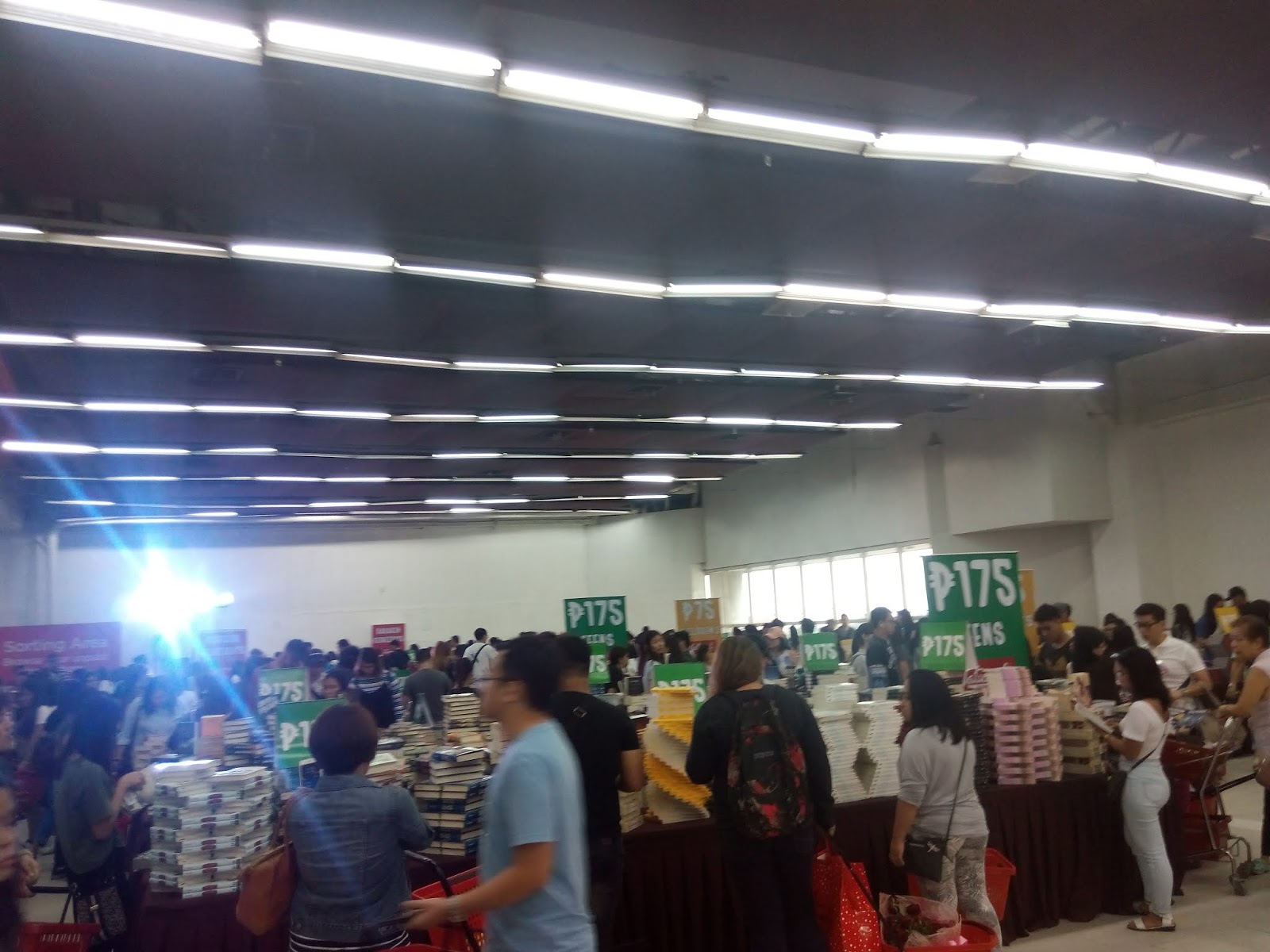
Just a few months after the Big Bad Wolf Book Fair came to the Queen City of the South, National Book Store launched its Book Binge Bazaar (BBB), making book lovers swoon all over again. The bazaar features low-priced books as well as school supplies. It runs from November 21 to 25, at the Cebu Trade Hall at the third level of SM City Cebu. It’s open from 10AM to 9PM (on Nov. 21, 22, and 25) and up to 10PM on Nov. 23 and 24. Posters and pictures of the event went viral on social media especially since it promised books for as low as Php75. If you’re planning to go, here are some things you should expect.

There aren’t as many books

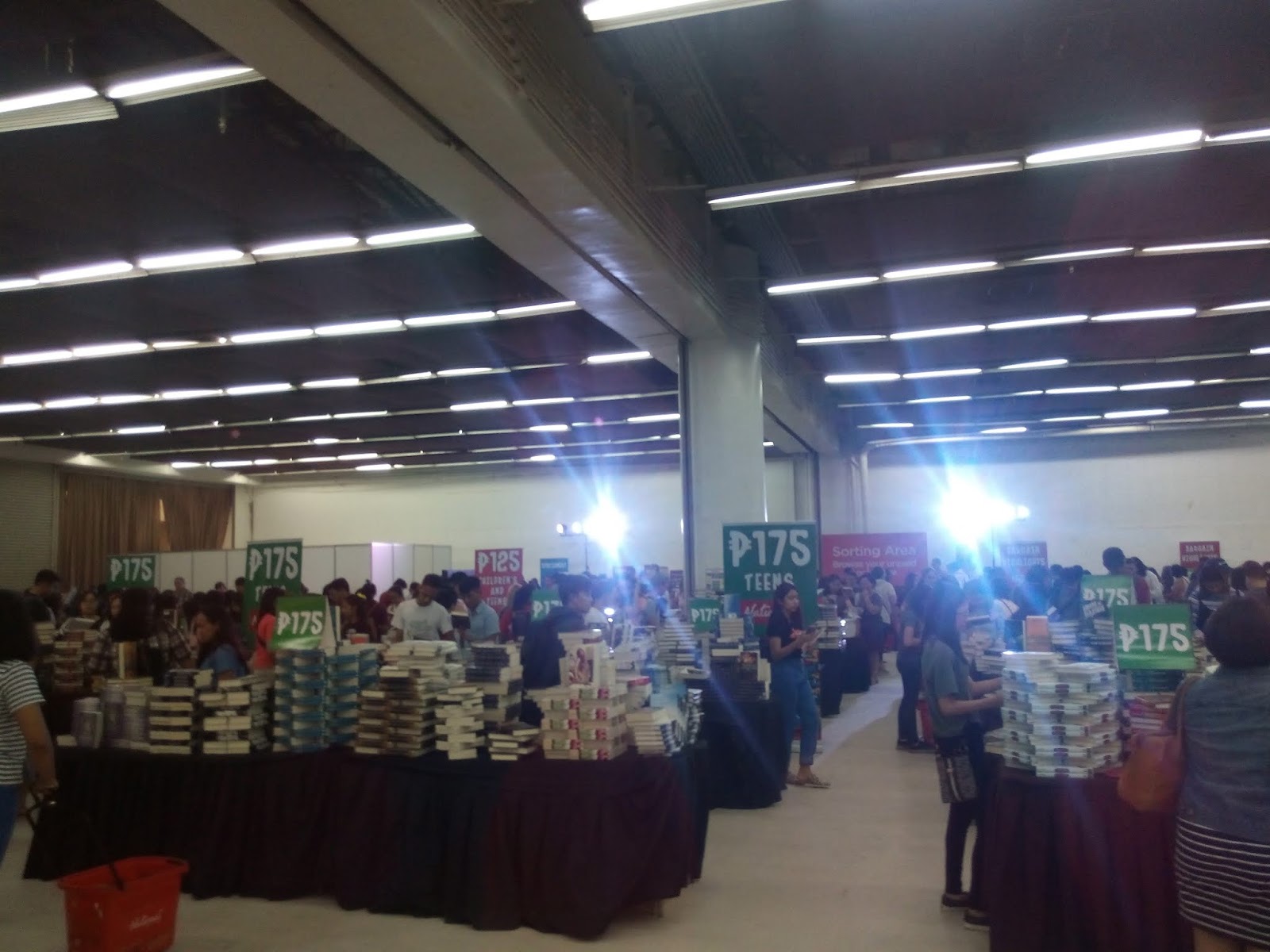
After being at the Big Bad Wolf Book Fair, I expected the same craziness—long lines, people clamoring for the last copy, and a people having a hard time deciding because of the variety of titles. However, the BBB occupied a much smaller floor area, and a lot of the books displayed were the same. I expected more titles, but the ones there were pretty good for me since I wasn’t looking for anything in particular.

Don’t expect the books to be Php75 unless you’re buying a children’s book

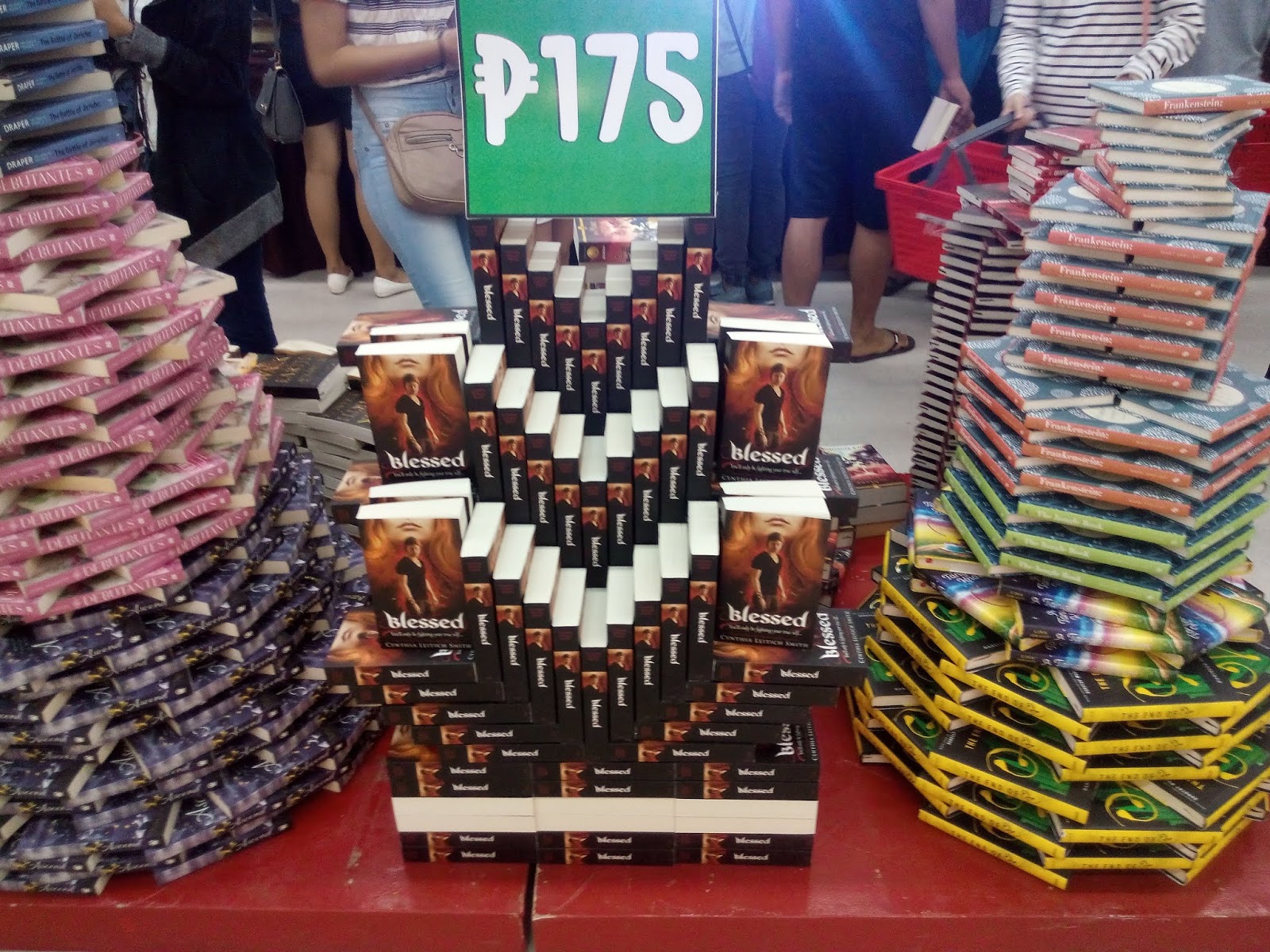
I set my budget at Php750, expecting to get ten books from that since the posters advertised 75-peso books. Of course I expected that there would be books priced higher than that, but what I didn’t expect was that almost all the books priced at Php75 were children’s books. Like the ones you gift a woman with a toddler. Most of the coveted YA novels and self-help books are priced at Php125, Php175, and Php275. So if you’ve already budgeted based on the 75 pesos each book as advertised, you might wanna change it up a bit. However, a lot of the titles are really good, and you could snag hardcovers for as low as Php125.

No long lines

As I mentioned before, the craziness of the BBW Book Fair was absent from BBB. But I did go there just a few minutes after the event opened, so there weren’t that many people yet. There were no lines at the cashier, and I didn’t have to wrestle my way into the piles.


They honor your Laking National Card

If you have a Laking National Card, you should bring it because they still add the points from your purchase even if the book prices are slashed.

There’s a place to sit

Good news to all those who are going to the bazaar to accompany a friend, significant other, or a family member but are not book lovers themselves! There is a designated area for you to sit while you wait (for hours). You don’t have to worry about getting grumpy as much.

There’s a place to sort out your books

Every bookworm does this. (Except when you’re super rich and don’t care about how much you spend.) We put books in our basket, but in the end, we have to make tough choices because we’re sticking to a budget. BBB makes that process easier by putting out tables where buyers can look at their books once again and decide which goes home with them and which didn’t make the cut.

What I Got

To give you an idea of the prices and titles, here are the books I bought from the bazaar. I chose them because they were highly recommended by Booktubers, and they’re very light reads.

Our Dark Duet by Victoria Schwab (Hardcover) – Php175

This Darkness Mine by Mindy McGinnis (Hardcover) – Php175

The Wrath and the Dawn by Renee Ahdieh (Softbound) – Php175

The Glittering Court by Richelle Mead (Hardcover) – Php175

Curiosity House: The Screaming Statue by Lauren Oliver and H.C. Chester (Softbound) – Php125

I got five books for Php825, which isn’t bad considering most of them are hardcover, and they are really good titles.

If you’re a book lover who wants to save up on his next purchase, you should definitely check out the Book Binge Bazaar. You’re sure to find great titles for less than half their retail prices. This event could also be your excuse for spending so much on books and another chance to make a promise that this will be the last book purchase for a while. (But we know you’re gonna break that.)

Happy browsing, fellas!

Is Law School Really Hard?

The most frequently asked question law students get from their friends as well as from undergrads who are aspiring to enter hell (a.k.a. law school) is whether it is really as hard as they heard it was. Some would answer that question in the affirmative. Others would just roll their eyes because they’re too tired to say anything. Perhaps others would die inside. Some (those with superhuman abilities) would say it’s really nothing to fuss over.
But is it really hard? If so, what makes it hard? Do you need a super high IQ to make to graduation without going insane and giving up your social life?
I’ve had the opportunity to start law school twice. My first take was in a small state university in our province. There were around 60 freshmen enrolled. We were cramped in our classroom, trying to make do of whatever space was available. The professor came in, and when he introduced himself, I was on the edge of my seat. We all knew him. We’ve heard the stories. He is one of the most well-respected judges in the province and definitely the most terrifying teacher in the JRMSU College of Law. The next day, I was a little worried that there wouldn’t be any chairs left. However, I was surprised when I heard that a lot of my classmates had already withdrawn from the course. A week went by, and more students dropped out. By the time the first semester was over, there were only around 10 left standing.
It is not uncommon for law students to drop out on the first week of classes. Some would even have to be forced out of the program for not making the cut. With this said, it seems that law school is really difficult—and indeed, it is. However, instead of being discouraging, my aim for this article is to encourage the aspiring law students to pursue with this degree. Because however hard law school may be, if you do your best and survive, it will all be worth it.
In his book The Study of Law: How to Conquer Law School, Jim Lopez has a great advice on how to change fright to might. He says that the best way to do it is to be prepared for what’s ahead. Fear usually comes from not knowing what to expect. A student who goes into law school fully prepared for the Socratic Method, who already knows how to digest cases, and who has read even the first few provisions in the codals would be much more confident in facing the dragons than that who comes to law school blissfully unaware of the perils ahead. Here’s the thing about the legal education: Intelligence is less important compared to stamina and determination. Some of the brightest students have dropped out while those who are not that brilliant continue to move forward because of their perseverance.
Here are some of the things that contribute to a law student’s anxiety: (1) work, (2) the Socratic Method, (3) the amount of reading materials, and (4) “terror” professors. The first one requires time and energy management to be overcome; the second through practice. The third is conquered through time management and learning how to speed-read. Finally, the last one ceases to become a problem once you realize that your professors are purposefully making themselves more scary and strict to motivate you to study. You just have to realize that it’s nothing personal if they embarrass you in front of the class. Law school is a training ground. If you squirm at the smallest insult, you won’t be able to handle what’s ahead after the bar.
There are two things you need to accept before entering law school. First, no one is going to hold your hand. Second, you have to study every day.
The first point is important to accept especially if you’re a fresh graduate who has no job experience. In college, you may have had your support group who have the time and patience to guide you. Law school is different. It’s a professional school, and it isn’t a requirement for you to get a job. It’s optional. Most of your friends are busy with their jobs and perhaps most won’t understand just how difficult your ordeal is. Once you graduate from college, you can work or have a family or travel. Instead, you chose to enroll despite the many warnings from friends about how difficult it can be. A lot of students drop out not because it is hard but because they’re taking in too much at the same time. Some are not used to the amount of reading materials assigned. Some would tremble during recitation. Others realize they don’t have enough time and energy to juggle both work and school. The reasons are endless, but the motivation is only one. It’s hard to fight for something you have a million reasons to give up and only a single reason to fight for. This is possible only when you love what you do.
Love conquers all. Yes, even law school. If you love it enough, you’ll see it through till the end. No amount of piercing stares from that terror professor or any amount of reading assignments can stop you from pushing through. It’s a game not only of mental toughness but emotional intelligence as well. You can memorize the provisions all you want and still break down during recitations if you’re emotionally unprepared.
That being said, here are some practical tips that can help you prepare for the first week.
1. Read at least the first 20 provisions of the Revised Penal Code, Civil Code, and the 1987 Constitution.
2. Ask the students of your future law school about the books the professors prefer. Even if you’re not sure which prof you’re going to end up with, it’s helpful to read at least the first 3 chapters of the books to help you understand the codal provisions.
3. Practice speaking aloud. This will be beneficial during recitations.
4. Find the landmark cases for Criminal Law, Political Law, and Persons and Family Relations and read those. At least 10 for each will be enough, just so you could get acquainted with how court decisions are written. Even if there are a lot of terms you don’t understand, don’t be discouraged. All law students go through that phase. It’s better if you tackle them before classes start.
Here are a few to start you off:
Political Law
People v. Perfecto GR No. L-18463 (October 4, 1922)
Lambino v. COMELEC GR No. 174153 (October 5, 2006)
Gonzales v. COMELEC GR No. L-28196 (November 9, 1967)
Civil Law
Tanada v. Tuvera GR No. 63915 (December 29, 1986)
People v. Que Po Lay GR No. L-6971 (March 29, 1954)
DBP v. CA GR No. 97998 (January 27, 1992)
5. Devise a system that could potentially work for your schedule. Plan your days and weeks ahead. Even if it doesn’t end up working for you, at least you didn’t go in blindly, just feeling your way around and ending up exhausted.
6. Let go. I said earlier that nobody’s gonna hold your hand, but that’s not without an exception. Even if your friends and family are too busy to be there for you, you’ll always have God to guide you. And remember that you’re just doing this for His glory and He’s never going to abandon you. When you have a king by your side, what can go wrong, right?
Good luck on your journey.

A Farewell to Boni

It’s unlike me to remember the exact moment I first meet someone. But I would never forget the first time I saw Boni. It was the first day of third-year high school—June 2009. I was glad to find out that there were only eighteen of us in class. The school decided to take grade cut-offs seriously, and only those who had managed to get high-enough marks made it to the first section. It was easy to remember all my classmates because there were only a few of us. It was easier still to spot the new kid. He was a transferee from a nearby high school—and he was cute. His making it to the first section told me he was smart. Cute and smart. The perfect combination. It was the start of my short-lived crush on Bonifacio.
For days, I’ve been teased by my classmates about him, and it was getting harder and harder to deny the truth. He eventually confessed he had feelings for my best friend, which, I have to admit, hurt a little. I thought it would be really hard to move on, but things got easier when my father told me we were related. Oops! This is why it’s important to attend reunions every once in a while.
Although the crush was gone, I still can’t help but admire my cousin’s kindness towards everyone, especially towards women. I can’t recall a time when he did not volunteer his assistance when a teacher was carrying more than one bag or when it comes to cleaning the room even though it was not his turn to do so.
He made me realize so many things about men. Because of him, I believed there were still good men in the world. His relationship with my best friend ended before we got to fourth year, and I remember clearly that afternoon when he hugged my friend so hard it looked like he was never going to let go. And he was crying. It was the first time I saw a guy cry because of a girl. I thought that only happens in movies. I saw the hurt in his eyes, as well as the desperation to hold on to the thing he loved the most. It made me believe in love again. That experience will stay with me forever.
After graduation, we all went our separate ways. It’s been years since I last saw Boni. The latest information I heard about him is that he had a new girlfriend during college. The next news I received was that of his death. I was told it happened at night. He was riding his motorcycle when he suddenly smashed into a gate. As quickly as that, he was gone.
I know I would never forget him. His old-school name. His chivalry. His vulnerabilities. His kindness. . . Especially his kindness. He was a good person. And that alone is enough.
It’s hard to wrap your head around the idea that the person whom you attended class with and whom you hope to see at your high school’s tenth-year reunion is gone now. It’s a whole different kind of sad when you lose someone your age. It makes you appreciate life more, realizing is brevity.
It’s been years since I last saw you, Bon. Farewell, old friend.

Del Mar v. Philippine Veterans Administration (G.R. No. L-27299) Case Digest

Del Mar v. Philippine Veterans Administration
G.R. No. L-27299
June 27, 1973
Facts:
Quirico del Mar served as chief judge advocate of the Cebu Area Command during World War II as a major. He obtained an honorable discharge from the service on October 20, 1946 on a certificate of permanent total physical disability. The Philippine Veterans Board (PVA’s predecessor) granted him a monthly life pension of Php50 effective January 28, 1947. In March 1950, however, the said Board discontinued payment of his pension. This was because del Mar is receiving a similar pension from the United States Government through the US Veterans Administration because he served in the US Army in the Far East during WWII. The discontinuation of the pension was based on Section 9 of RA 65, which states
“The persons mentioned in sections one and two hereof who are permanently incapacitated from work owing to sickness, disease, or injuries sustained in line of duty, shall be given a life pension of one hundred pesos a month, and ten pesos a month for each of his unmarried children below 18 years of age, unless they are actually receiving a similar pension from other Government funds, and shall receive, in addition, the necessary hospitalization and medical care.”
This provision was reflected in the PVA’s Rules and Regulations on Veterans’ Benefits, specifically on Section 6 of Regulation No. 2, to wit,
“SEC. 6. Effect of receipt of USVA pension benefit — termination, reduction. — An award of a similar disability compensation from the US Veterans Administration shall be a ground for the cancellation of a disability pension granted under this Regulation: Provided, however, That if and while the disability compensation awarded by the US Veterans Administration is less than the pension granted hereunder, the difference in amount shall be assumed and paid by the PVA: Provided, further, That upon proper application, the disability award previously cancelled may be restored upon the termination of the US Veterans Administration award if the cause of such termination is due to negative military service report of the pensioner certified by the US Department of the Army and not for any other valid cause: Provided, finally, That the veteran is medically determined to be still suffering from the disability for which he was previously awarded a pension. Payment of pension thus restored shall take effect or shall commence only from the date of approval of restoration and when funds become available.”
PVA construes “from other Government funds” to include funds of the United States.
Issue:
May the PVA be sued?
Ruling:
Yes. The Court made a lengthy disquisition on the history, development, and organization of the PVA to show that it is an entity or agency of the Republic of the Philippines. However, even if it is a government entity, the PVA could not validly invoke the State immunity from suit since in this case, the claimant institutes an action against a functionary who fails to comply with his statutory duty to release the amount claimed from the public funds already appropriated by statute for the benefit of the said claimant.

Department of Agriculture v. NLRC (G.R. No. 104269) Case Digest

Department of Agriculture v. NLRC
G.R. No. 104269
November 11, 1993
Facts:
The Department of Agriculture (DA) and Sultan Security Agency entered into a contract on April 1, 1989 for security services to be provided by the agency. On September 13, 1990, several guards of the agency field a complaint for underpayment of wages, non-payment of 13th-mmonth pay, uniform allowances,etc., against the DA and the security agency.
The Executive Labor Arbiter found the DA and the agency jointly and severally liable for the payment of the money claims amounting to Php266,483.91. The decision became final and executory since neither of the two appealed.
On July 18, 1991, the Labor Arbiter issued a writ of execution commanding the city sheriff to enforce the judgment against the property of the two respondents. The sheriff levied the DA;’s motor vehicles, including a unit of Toyota Hi-Ace, a Toyota mini cruiser, and a Toyota Crown. The DA alleged that the court could not levy upon its properties since it is a government agency and invoked the State immunity against suit. In answer, the petitioners contend that the DA gave its consent to be sued when it entered into a service contract with Sultan Security Agency.
Issues:
Can the court validly levy upon the DA’s properties?
Ruling:
No. When the State gives its consent to be sued, it does not mean that it consents to an unrestrained execution against it. All it does when it gives its consent to be sued is to allow the other party to prove that the State has a liability. The power of the Courts ends when the judgment is rendered. Government funds may not be seized under writs of execution or garnishment to satisfy such judgments. This is based on considerations of public policy.

Lansang v. Court of Appeals (G.R. No. 102667) Case Digest

Lansang v. Court of Appeals
G.R. No. 102667
February 23, 2000
Facts:
General Assembly of the Blind (GABI) was allegedly awarded a verbal contract of lease by the National Parks Development Committee (NPDC) in 1970. GABI was allegedly given office and library space as well as kiosks for selling food and drinks at Rizal Park.The organization remitted 40 percent of the profits to NPDC. However, there was no showing who received the share of the profits or how they were used or spent.
With the change of government, Amadeo Lansang, the new Chairman of the NPDC, ordered GABI to vacate the premises. The former sought to clean up Rizal Park. The GABI president, Jose Iglesias, who was totally blind, signed the notice of conformity to the order because he was told by Ricardo Villanueva, then chief warden of Rizal Park, that he was merely acknowledging receipt of the notice. On March 29, 1988, GABI was finally evicted by NPDC.
GABI’s action for damages was dismissed on the grounds that it was a suit against the State. The Court of Appeals ruled that the mere allegation that a government official is being sued in his official capacity is not enough to protect such official from liability for acts done without or in excess of his authority. The CA reversed the decision of the trial court. The appellate court found Lansang liable for damages under Articles 19, 21, and 24 of the Civil Code.
Issue:
Is this a suit against the State?
Ruling:
No. In this case, Lansang was being sued in his private capacity, not as his capacity as NPDC chairman. The complaint merely identified him as chairman of the NPDC but did not categorically state that he is being sued in that capacity. Since this is the case, the suit is valid. However, the Court found no evidence of abuse on the part of Lansang.
Furthermore, the Court ruled that Rizal Park is beyond the commerce of man and thus could not be the subject of a lease contract. The verbal agreement was only a matter of accommodation by the previous administrator.

Design a site like this with WordPress.com
Get started