People of the Philippines v. Que Po Lay (Case Digest) G.R. No. L-6791

People of the Philippines v. Que Po Lay
G.R. No. L-6791
March 29, 1954

THE PEOPLE OF THE PHILIPPINES, plaintiff-appellee,
vs.
QUE PO LAY, defendant-appellant.

Facts:
Que Po Lay was charged for violating Central Bank Circular No. 20 when he failed to sell foreign exchange amounting to $7000. Because of this, he was sentenced to spend six months in prison and pay a Php1000 fine. Circular No. 20 was issued in the year 1949, but it was not published until November 1951, three months after Que Po Lay’s conviction of its violation.

Issue:
Can Que Po Lay be justly convicted of violating Circular No. 20 before its publication?

Ruling:
No. The circular prescribes a penalty in the event of its violation. Thus, it has the force and effect of law and therefore should be published before it could have a binding effect. Before publication, “in the eyes of the law, there was no circular to be violated.” Que Po Lay therefore did not violate Circular No. 20 and was acquitted.

Passion Isn’t All That: A Review of Cal Newport’s “So Good They Can’t Ignore You”

Cal Newport was one of those college students who wanted to hack into studying to get the most profit out of so little investment. His blog, Study Hacks, gained so much attention since its launch because he presents no-nonsense tips on how to improve students’ grades without spending so much time studying. In So Good They Can’t Ignore You, Dr. Newport seeks to answer one question: Why do some people end up loving what they do, while so many others fail at this goal? The book centers around the reasons why “Follow your passion” is bad advice. It is an engaging and eye-opening book that will give anyone the courage to do better at anything.
He started by telling the story of Thomas, a man who gave up his job to follow his passion only to realize later that he was still unhappy. The story aims to make the readers see that following your passion does not necessarily lead to happiness or that feeling of fulfillment we seem to associate with the “dream job.”
Newport provides four main rules in the book, namely:
1. Don’t follow your passion.
2. Be so good they can’t ignore you. (Or, the importance of skill)
3. Turn down a promotion. (Or, the importance of control)
4. Think small, act big. (Or, the importance of mission)
In the first part, he argues that passion is rare, takes time, and is usually just the side effect of mastery. After researching through journals and interviewing people, Newport arrived at the conclusion that the more we focus on loving what we do, the less we end up doing it. I agree. It’s like looking at someone you love whom you think is perfect but actually isn’t. Once you find that single flaw, it’s hard to go back to that feeling because you’re expecting perfection from a flawed individual. We are just so drawn to the idea that there is that one perfect job out there for us and if we find, we can be happy. So instead of doing our best with what we have, we instead dream about something else, making us unfulfilled at the present. This is the danger. As has been advocated by many philosophers, what we really have now is the present and nothing else. The past is gone, and the future is yet to come. But we concentrate too much on the could-bes that might not even be realized.
However, he doesn’t absolutely discard passion as a component of success. Newport says that for some people, the passion hypothesis works. However, these are rare and are mostly concentrated on athletes and musicians. For the rest of us, “follow you passion” is bad advice because it may lead to impulsive and impractical decisions that ultimately make us unhappy.
The second rule, which is similar to the book’s title, focuses on the craftsman mindset. According to the author, the difference between the craftsman mindset and the passion mindset is that the latter makes you focus on what the world can do for you while the former makes you focus on what you can do for the world. This is one of the reasons why the passion hypothesis leads to unhappiness. We are constantly thinking about what’s wrong with the work we are doing, with our environment, with the people we work with, as if we are expecting everything to be perfect before we could do our jobs well. The problem is the world does not offer this perfection. There will always be office gossip, incompetent workmates, and hellish bosses even if you’re already doing the work you love. Adapting the craftsman mindset shifts our attention to what we can do to improve our skills so we can be better at what we do. I’ve mentioned earlier that Newport wrote that passion is usually just the side effect of mastery. He suggests putting aside the question of whether your job is your true passion and instead focusing on being so good at what you do. Think about it. Don’t you always feel good about doing something that you’re good at and producing outputs you can be proud of? The happiness and fulfillment comes after the mastery of the skill required for the job. As Newport writes, “You adapt the craftsman mindset first and the passion follows.” Of course, doing this is not easy. There’s deliberate practice involved in order to have rare and valuable skills. And this takes sacrifice and getting out of your comfort zone. This is why not a lot of people succeed.
On the other hand, the third rule focuses on the importance of control. Imagine this. Let’s say you want to become a writer. It’s what you love doing, and you know you’re happiest when you’re crafting stories. However, it has come to the point where you’re now bombarded with deadlines from your editor. You have to finish x numbers of chapters by Monday. The book has to be launched next month, and you need to hurry up. Suddenly, your passion feels more and more like burdensome work. Then it makes you unhappy. Why? Because you’ve lost control of your time. Someone else is dictating what you should do and when it needs to be done. I’ve witnessed at least two incidences in my ten-month stay at my first job where employees literally walked out of the room because they were upset with the work schedule. They were required to show up at work on certain days that they already had plans for. This can make anyone unhappy.
This is why this chapter on control is an essential part of the book. In this chapter, Newport points out how having control of your life, especially your time, can add to the overall feeling of fulfillment. However, he warns against wanting control so much without having the required career capital first. People often have this idea that they could just drop everything in the pursuit of their dreams. This sounds like a brave move, but is oftentimes foolish. There are no guarantees to success and, like some of the people described in the book, you might discover later that the dream job you had in mind does not make you happy after all. So what should you do? Should this possible failure stop you from pursuing your dreams? Newport says no. Instead, he recommends using the Law of Financial Viability, which states
When deciding whether to follow an appealing pursuit that will introduce more control into your work life, seek evidence of whether people are willing to pay for it. If you find this evidence, continue. If not, move on.
Thus, if you have enough career capital and what you want to do can generate enough financial resources to support you, go for it. But don’t just impulsively take the leap and hope for the best.
Finally, in the fourth and last rules, Newport argues that a unifying mission to one’s working life can be a source of great satisfaction. He writes that a mission makes people more fulfilled because it will make them feel like they’re doing something that maximize their impact on the world. However, he cautions once more about the importance of having a career capital first before pursuing a mission because doing otherwise would not be sustainable. The chapter is entitled “Think Small, Act Big” because it is suggested here that making little bets, i.e., small steps that generate concrete feedback, can lead you to the discovery and fulfillment of your mission, to make you realize what the next step should be. By doing so, you are slowly discovering what work will lead you to fulfill your mission, which makes being passionate about what you do so much easier.
After discussing the abovementioned four rules, Newport concluded by demonstrating how he applied these rules in his own life. At the final part, he went back to the story of Thomas and how the latter realized that he didn’t need to have the perfect job to attain happiness at work. He just needed to approach the work he already has in a better way.
Overall, I found the book not only inspiring but also eye-opening. The language used is simple, and the ideas are presented direct-to-the-point. I have never found a book like this that takes a widely believed idea and crushes it down to its core.
Self-help books are usually written in a manner that encourages you and inspires you to go for your dreams. This book, however, reads like a best friend giving you tough love. Newport highlights the importance of hard work and dedication in improving your skills in enjoying your present occupation. So far, this is the best self-help book I have ever read. It turned my mind around completely by debunking the very foundation of my belief in how to go about doing something fulfilling. It made me see the reality that has been staring me in the face since I was young—all the happiest people I know did not plan their course. Instead, they found something they think they can be good at and worked hard in being the best in their chosen field.

A Big Day for the Mendes Army: Shawn Turns 20

Being a Shawn Mendes fan is weird. On one hand, you’re supporting an old soul, a mature and professional artist who’s dedicated to what he does and cares for his fans so much you’d think you’re part of his family before you even meet him. On the other hand, you also know your idol is still a kid whose innocence you want to preserve and whom you want to keep away from the troubles of the world (and from falling off the stage). It’s like taking the role of both a supporter and a parent when it comes to this one. Today is a big day for us supporters/parents because finally, our favorite Muffin Man is officially no longer a teenager.

I personally am a new part of the Mendes Army. I “discovered” Shawn just about three months ago as I was looking for live performances of Camila Cabello because my best friend could not stop talking about her. (And also, she’s awesome.) This video about a certain Shawn Mendes opening up about his sexuality keeps on popping up on my recommendations, so I finally clicked it. It was the video Shawn posted in which he clarified that he is not gay and that sexuality should not even be an issue because he’d like people to focus on his music, not on his personal preferences. That immediately impressed me. He handled the situation well at such a young age, and I decided to search for more. I found out I’d been a fan of his work already and had been singing some of his songs before even finding out about him. I know a lot of people criticize his fans for liking him only because of his looks, but trust me, his musical genius precedes his physical appearance. Take it from someone who heard him first before seeing him.

I then went on to watch his Carpool Karaoke with James Corden. That show introduced me to Mercy, In My Blood, and Lost in Japan. The lyrics of the second song just tugged on my heartstrings. It is such an honest and relatable song, and I found myself destroying the replay button on Youtube. His performance of Mercy at the Honda Stage in Canada made me realize how awesome he sounds live. Man, those high notes were just perfect!

Needless to say, I got hooked on the Mendes fever. How could you not admire someone who’s not only talented and (oh my gosh) drop-dead gorgeous but also sincere and dedicated to his supporters and to what he does? I know I speak for the whole Mendes Army when I say that Shawn makes us feel part of a big and very much loved family whether we’ve seen him in person or not. And today, as he sets out into the world no longer a teenager, I know we’re all wishing him the best in his career, family life, and love life. And although change is inevitable, I know we’re hoping that he won’t change in terms of the things we love about him most—his humility, down-to-earth kindness, and his pure, unadulterated craziness.

So here’s to Shawn on his twentieth! Maybe we’ll meet someday, but for now, I’m just another fan whose walls are covered with his pictures, admiring him from a distance.

Maligayang Kaarawan, Shawn!

Love from the Philippines!

ABS-CBN Broadcasting Corporation v. Commission on Elections

ABS-CBN Broadcasting Corporation v. Commission on Elections
GR No. 133486
January 28, 2000

Facts:
The broadcasting group ABS-CBN wanted to cover the May 1998 national elections and conduct an exit survey. The Commission on Elections (COMELEC) released a resolution enjoining the company to do so on the grounds that the findings of the project might conflict with the official COMELEC count as well as the unofficial quick count of the National Movement for Free Elections (Namfrel) and may result in violence and anarchy among the voters.

Issue:
1. Can the COMELEC legally prevent ABS-CBN from conducting exit polls during the national elections?

2. Has the issue been rendered moot and academic because the elections had already occurred?

Ruling:

1. No. Two tests are available for determining if the freedom of speech and expression may be limited: the clear and present danger rule and the dangerous tendency rule. In this case, the Court decided that the COMELEC’s fear of violence and anarchy occurring because of the exit polls are merely speculative and is thus untenable, i.e., it does not pass any of the two tests. Although the government has the power to limit the freedom using its police power, it should not do so if there are other measures that can be done to achieve the goal. The exit polls will not have the power of replacing the official COMELEC count. Their concern for possible violent reactions does not justify the total ban on conducting the exit polls, which is a means of adding “meaning to the equally vital right of suffrage.”

The petition was granted and the temporary restraining order against the COMELEC resolution was made permanent.

2. No. The issue is not totally moot because while the resolution affected only the 1998 elections, its “implications on the people’s fundamental freedom of expression transcend the past election.” This means that this issue could come up again in subsequent elections, so whatever decision the Court releases can have future applications

Alunan III v. Mirasol

Alunan III v. Mirasol
GR No. 108399
July 31, 1997

Facts:
The Local Government Code of 1991, which took effect on January 1, 1992, provided that there should be a Sangguniang Kabataan (SK) in every barangay. It also stated that the first elections for the SK shall be held thirty days after the next local elections. Under the said code, the first local elections were held on May 11, 1992. However, because of postponements, the SK election was scheduled only on December 4, 1992. Naturally, registration in Manila was conducted, but on September 18, 1992, the Department of Interior and Local Government (DILG) through then secretary Rafael M. Alunan III issued a letter-resolution that exempted Manila from holding the elections on the ground that the elections held on May 26, 1990 were to be considered the first under the Local Government Code.

While the case is still under review by the Supreme Court, a second election occurred, held on May 13, 1996.

Issue:
Will the holding of the second elections render the case moot and academic?

Ruling:
No. It has been held that the courts will decide a question otherwise moot and academic if it is capable of repetition yet evading review. In this case, the question of whether the COMELEC can validly vest their control and supervision of the SK elections to the DILG is very likely to arise again in subsequent elections.

An Afternoon at Napo Beach

The road took us to places that looked more and more like scenes at the beginning of a crappy teenage horror movie. Houses became rarer and trees got taller. We were closer to the mountains that every now and then we couldn’t help but stop the motorcycle to stare and take pictures of their majestic beauty. The rocks made it difficult to maneuver the vehicle, so we had to hold tightly to each other to avoid falling off. When the view started to change from forest to beaches, we knew we were close to our destination. We didn’t have any maps, nor were we sure we were following the right path, but the big yellow umbrellas from the distance told us we’ll get there soon.

The place has been recommended quite a couple of times before by friends. They said Napo beach was a good place to visit because it offers a silent retreat to those who do. They were not wrong. Upon entering the gate, we were met by a quiet place that only two other groups were enjoying. One was a family who occupied around three cottages, while the other was a group of teenagers who came there in pairs. (It was quite uncomfortable seeing them being so cuddly with one another.) As for us, we settled for a table under a tree (but didn’t cuddle). We were just three tweens looking for a quick getaway from the city. The trip came as an impulsive decision from the night before. Nobody was sure we would really go for it, but we packed extra clothes just in case.

The view was wonderful. The serenity of the place was enough compensation for the bumpy ride there. A big rock formation stood on the right, a good background for your next Instagram post. The water was clear, free of unnecessary garbage and other unwanted materials. The sound of the waves slowly coming to the shore relaxed our minds and made us forget our troubles for a whole afternoon.
The only bad thing about the place is the fact that there were so many seaweeds in the sand. This is a big issue for me since I don’t like walking barefoot while stepping on plant life. I had to convince my best friend to let me hold on to her so she could drag me along the water. That way, I could feel like I was swimming without having my feet touch the weeds beneath.

After a whole afternoon of picture-taking, eating, talking, and pretending we were mermaids, we washed up at the two available bathrooms. There was plenty of water, so we had no problem cleaning ourselves except for the fact that we had forgotten to bring shampoo and soap. After taking in the view one last time, we headed back to the city, our skins still sticky from the salt residues and our hairs still damp. It was an afternoon well spent.

Manok at Jolens

“Limang pitik pag talo, ha?”

Nakayuko ang tatlong lalaki sa gilid ng daan. Malaki ang agwat ng edad nila. May walo, may labintatlo, may dise-ocho. Sa unang tingin ay hindi mo mahuhulaan ang totoong pangalan ng mga ito—James, Carlos, at Anton. Mga pangalang hindi nababagay para sa mga maruruming batang kalye. Hindi rin naman mahalaga ang mga pangalang iyon dahil wala naman silang birth certificate. Ipinanganak lang sa sulok at sa sulok na rin lumaki. Palayaw lang ang ginagamit ng magkakaibigan na tuluyang nalilimutan ang mga totoong pangalan. Utoy. Caloy. Ton-ton. Mas akma sa kanilang karungisan.

Di alintana ang dumi ng kalsada, nakatuon ang atensyon nila sa puting jolen na kailangang tamaan. Sanay na sila sa alikabok at putik at baho. Wala na sa kanila ang mga nagdaraang dyip at ang maitim na usok mula sa trambutsong ilang dekada nang hindi napapalitan. Sa sidewalk na sila natutulog. Dito na rin naglalaro.
Alas dose na ngunit wala pang laman ang sikmura ng tatlo. Walang problema. Kumain na sila ng malaking fried chicken kagabi na itinapon ng estudyante sa basurahan. Kaunti nalang ang kanin pero napagkasya din nila. Kinuha ni Ton-ton ang naiwang buto at nginuya ito habang naghihintay ng antok. Nung gabing yon, napuno ang panaginip nya ng masasarap na pagkain at punong sikmura.

“Redi na?” tanong ni Caloy habang sinisigurong tama ang anggulo ng kamay.

“Okey. Payts,” ang sagot ni Utoy na kahit na pinakabata man sa grupo ay may pinakalamakas na boses sa tatlo.

Hindi natamaan ni Caloy ang jolen at naghanda na para sa pitik ng mga kalaro. Ilang oras pa nilang sinubukan, pero talo pa rin ni Ton-ton ang dalawa. Hindi na sila nagtaka. Mas marami nang praktis ang dise-ocho anyos na hanggang ngayon ay wala pa ring ibang ginagawa buong araw.
Nang malapit na ang gabi, tumunog na rin ang sikmura ng tatlo.

“Magdadala kaya ng ulam tatay ko?” tanong ni Utoy.

“Naka-iskor yun ng selpon kahapon. Yung tatskrin. Malaki din siguro ang kinita nya dun, kaya wag mo nang asahang babalik yun ngayon. Malamang nagpapakalasing pa yun sa tindahan. Maghanap nalang tayo ng mapaghihingan,” payo ni Caloy.

“Pwesto na dun habang marami pang tao!” pasigaw na sabi ni Ton-ton, sabay tulak sa kaibigan.

Gaya ng dati, si Utoy ang lumalapit sa mga nagdaraan. Mas naiintindihan nila kung bata ang nanghihingi ng pangkain dahil wala pa itong kakayanang maghanapbuhay. Tinitingnan lang nila nang masama si Caloy at Ton-ton kapag sila ang humingi.

“Anlalaki na ng katawan, nanlilimos pa rin,” ang madalas na kutya ng nagsisipagdaan. “Hindi man lang makahanap ng trabaho para mabuhay nang disente.”

Ang hindi puna ng mga estranghero ay disente na para sa kanila ang makakain nang dalawang beses sa isang araw kahit na hinalungkat lang sa basurahan ang pananghalian at hapunan. Madalas ay binubusog na lang nila ang sarili sa pagtingin sa loob ng mga restawran at iniisip na sa bibig nila pumapasok ang bawat subo ng mga kostomer na kadalasa’y nagtitira pa ng kaunti sa plato.

Sa wakas ay may nag-abot din ng supot kay Utoy. Isang matandang babae na hirap na sa paglalakad na inaalalayan pa ng apong halos kaedad lang ni Ton-ton. Bago umalis ang lola, may iniabot itong maliit na bagay kay Utoy na mahigpit na hinawakan ng huli at agad na ibinulsa. Matapos mag-alay ng maikling pasasalamat, tumakbo na si Utoy sa mga kaibigan at pinagsaluhan nila ang limos na pagkain.

“Walastik! Jalibee, pare!” sabi ni Caloy bago sabay na isinubo ang spaghetti at burger.

“Ayos! May manok na naman!” sigaw ni Utoy.

Naglaro ng jolens buong maghapon. Matutulog na may laman ang tiyan. Disente ang araw nila.

Matapos ang ilang oras na pagmamasid sa mga dumaraan, inilapag na nila ang mga karton sa sulok at nagsimula nang humiga. Habang hinihintay ang antok, napupuna ni Caloy ang paunti-unting paghupa ng trapik at pagkonti ng mga yapak sa kalsada. Hindi kalaunan ay napikit na rin siya at tuluyang nahimbing.

Pumatak ang alas dose. Isang taong nagtatago sa dilim. Dalawang kamay na humila palayo. Tatlong magbabarkada na napadaan ngunit walang napuna. Apat na minutong nagpumiglas. Limang saksak.

Ilang segundo pa bago nawalan ng malay si Utoy. Sa huling hininga’y nakuha pa nitong tumingin sa kaibigan na kinakapkap ang kanyang pantalon upang hanapin ang isandaang pisong limos ng mabait na ale.

Tirik na ang araw nang mapuna ni Manong Julio ang amoy. Maya-maya pay nagsipagdatingan na rin ang mga nakarinig sa balita.

“Sino kaya ang pumatay?”

“Kawawa naman yung bata.”

Matapos punain ang kaawa-awang kinahinatnan ni Utoy, nagsialisan na rin ang mga chismosong inaalala na kung anong uulamin sa hapunan. Dumating ang dyip na walang masyadong laman. Nag-unahan na ang mga nakikiusisa sa naganap at tuluyang kinalimutan ang nakita. Hindi na inimbistigahan ng pulisya ang krimen. Normal lang yun sa malaking syudad. Batang tambay na napagdiskitahan ng adik. Wala nang bago.

Inihagis ng pulis ang hinihithit na sigarilyo at tinapakan upang mapatay ang apoy. Kung anuman ang nangyari nung hapon sa walong taong gulang na bata ay hindi na niya ikinabigla.

Walang may alam. Wala ring may pakialam.

Anxious Thoughts of an Aspiring Lawyer

A career in the legal field offers a lot of exciting opportunities, and even though many people would think otherwise, a license to practice law still carries with it a degree of prestige and respect. To be able to acquire that coveted Atty. that precedes one’s name, the student has to get through law school and overcome all its challenges. However, aside from the constant fear of being called on unprepared during class and the uncertainty of making it through the semester unscathed, there are other things that the future lawyer thinks about, things that are much more important than grades or passing the bar exams. These are the thoughts that are hard to get rid of, always lurking at the back of the mind and refusing to go away. These relate to the morality of the tasks the job entails and whether the new attorney could stand his ground when pressured by the not-so-ethical but “accepted” practices in the legal arena.

Before going any further, here’s a caveat. I have no experience working in the legal field, and this article is based solely on stories and the stereotypical characteristics attributed to lawyers.

When I was in elementary school, my father told me and my siblings that at least one of us should become a lawyer because it pays to have a legal mind in the family just in case any unfortunate event occurs. My sister and I immediately rejected the idea for the following reasons: (1) we do not wish to die early and (2) we don’t want to lie just to win a case. Based on our answers, it’s clear that we perceived lawyers to be liars and people who are constantly under threat because of the nature of their job.

I know that lawyers in TV series are glamorized versions of the actual ones who don’t always get to visit the courtroom. When I watched How to Get Away with Murder, I was hoping to be more inspired to become a good lawyer like Annalise Keating. Unfortunately, it had the opposite effect for me. Although successful in her career and almost always winning every case she handles, the tough-talking lawyer’s life is not the one I want. Law students study hard to win cases because to most, it’s the only thing that matters in the courtroom. Are there lawyers who are willing to push for the acquittal of their clients even though they are aware of their guilt? Is one’s professional record more important than morality? Criminals have rights too, but when the lawyer sees a technical defect on his opponent’s side, will he take it just to win the case?

In the 1979 movie And Justice for All, one of Al Pacino’s lawyer friends came to him one night, drunk. The first question he asks is, “I’m a good lawyer, right?” Then he proceeds to tell Al that his previous client whom he helped get away with murder using a mere technicality defense had just killed two children. The lawyer’s guilt was evident and well-founded. If he had not gotten the murderer off the crime, the latter would have been in jail and the children would have stayed alive. Could anyone live knowing what he did to contribute to the crime without questioning his involvement in the subsequent murders?

The law protects criminals as well as the victims. An accused could go free due to lack of evidence. And even though evidence might be present, the court ignores it if it is considered inadmissible. Judges are bound to decide based only on those that are allowed by law, closing their eyes on reality even if it’s staring them in the eye.

Perhaps equally disturbing is when you’re somehow responsible for putting an innocent person behind bars and making them pay for a crime they did not do. This scenario is famously illustrated in the case of the so-called Central Park Five where five teenagers were accused of the rape of a jogger back in 1989. The case got a lot of attention because the victim was a white woman while the accused were males who belonged to minority races. No evidence pointed to them except for the confessions they were made to sign after they were pressured by police officers. The boys suffered between 6 and 13 years of jail time. After serving their sentences, they were yet to face the greater punishment—being discriminated by society. They had a hard time finding jobs and were forever branded as ex-convicts. Years later, they finally found the real suspect who admitted to the crime. The Central Park Five’s names were finally cleared, but no one could give them back the time they lost in prison.

These thoughts and similar ones like them are what make aspiring lawyers pause for a while to rethink about the profession they are trying so hard to fight for. Being able to practice law is a privilege that is difficult to obtain but easy to lose. One wrong move could ruin it all. But there are still those who are willing to risk it in return for a more glorious career and track record.

Winning is good, but how far can a lawyer be willing to go, and how much is he willing to lose to see that justice is served?

My Big Bad Wolf Book Fair Experience

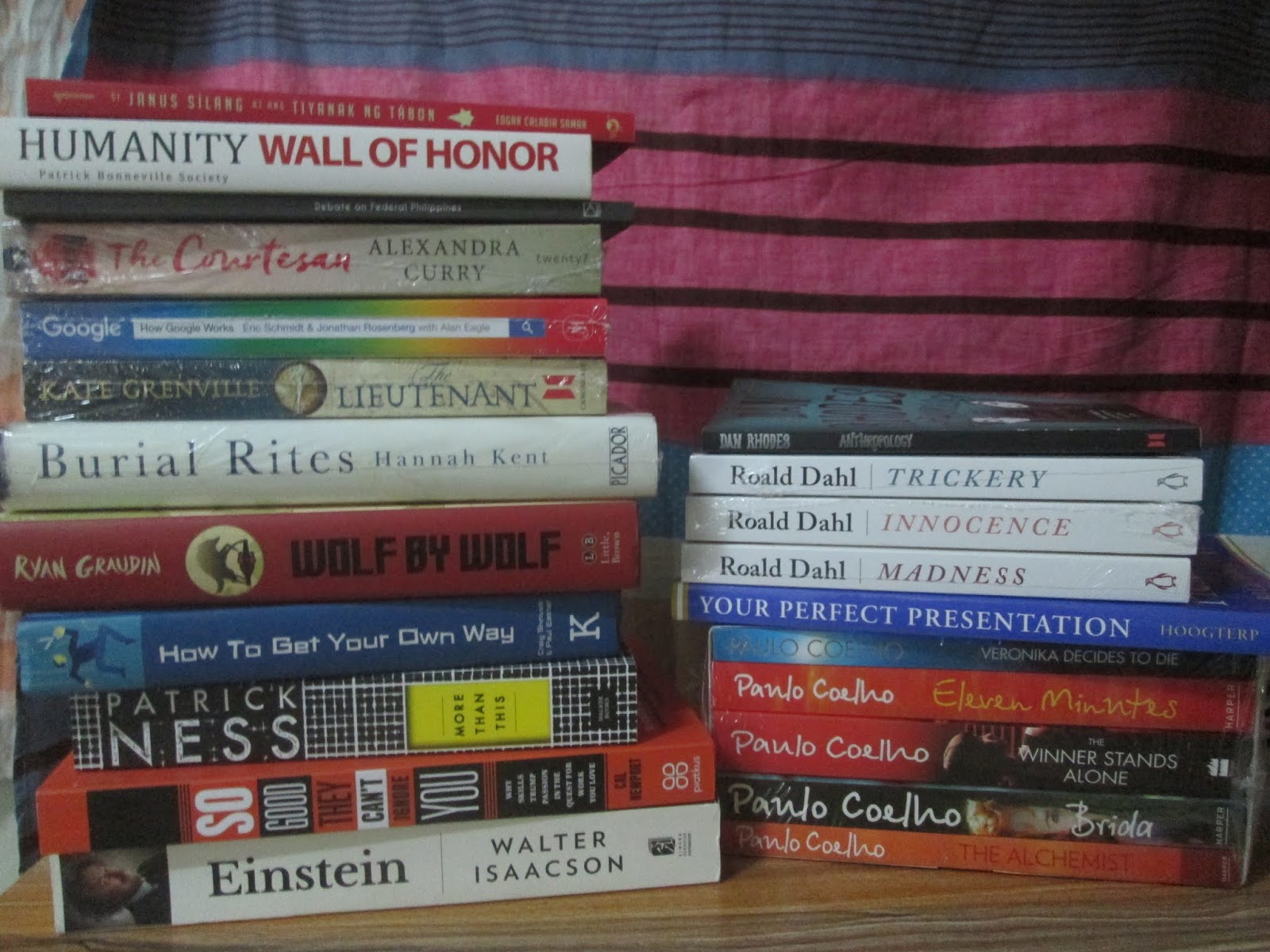
Book lovers were thrilled when news that a book fair was coming to Cebu City. The Big Bad Wolf, a fair that originated in Malaysia opened its doors to Cebuanos on July 12, 2018, delivering about a million books for lower prices. I personally chose to come back to Cebu on the said date to take part in the event. Along with fellow book nerds, I scoured the huge exhibit for titles that I like. I looked for ones that were highly recommended to me by friends and BookTubers. The prices varied, but most of the books were either Php190 or Php230. I was told by friends who had been to the preview that the line was crazy, so I did not risk it and chose my purchases in less than an hour. There was still no line when we got to the cashier and were able to get out quickly. The doors opened at 9 AM, and we had completed our purchase before 10.

I bought five books in the morning and went back with my sister in the afternoon and bought five more. Personally, I don’t think the selection of books was that great because a lot of the titles I was expecting were not there. However, it could be that they were sold out from the day before. I did see some Facebook posts of people purchasing books on preview day that I was not able to find the next day. People were hauling books by dozens, filling their carts with as many great reads as they could find. I bet a lot of them saved up for the event and, like a lot of bibliophiles on a budget, promise not to buy any more books for the end of the year. (Bless our souls for believing that we could actually do this.)

Shopping at the fair was comfortable enough. Although there were a lot of people walking around with carts, there was still enough room to move around. If you do bring a book with you to the event, it has to be stamped at the entrance. So if you don’t want a big red Big Bad Wolf stamp on your book, it’s better to leave it at home. There are also no drinks or food allowed inside. People had to leave their tumblers and water bottles at the entrance.

If you’re looking for a particular book, don’t expect the assistants to know where they are. They are just going to ask you what the genre of the book is and point you to the right table. I asked them if they had any Mary Beard books available, but no one could say for sure. In terms of book availability, I recommend hurrying up because they sell out so fast. When I got there in the morning, there was a big pile of Paulo Coelho boxed set, and I bought one for my friend. When we returned in the afternoon, they were all gone. My friend even had to purchase a sample book because it was the only one left. And she had a guy approach her, asking if she was willing to give up the book because it was the only title he came to the fair for. And even though we were one of the first ones to get in, when a friend asked where the Percy Jackson set was located, he was told they were all sold out from the day before. I don’t know if they restock at the end of the day. I hope they do.

The books are sealed with one sample book that’s already opened. However, this is not true for all books. Maybe some of them got misplaced, but for a lot of the selections, there was no sample book we could look through to help us decide on the purchase.

These are just a couple of things to keep in mind when going to the book fair. Overall, it was an enjoyable experience and definitely a haven for all bibliophiles.

Excuse me while I start saving money for next year’s BBW. Does anybody know when that will be?

Filipino Traits that Hinder Philippine Progress According to Teodoro Agoncillo

Source: https://philippinesreport.com/remain-valiant-defend-country-senators-urge-filipinos/
 
 
Filipinos have unique traits that are admired by other nationalities. But while our strong sense of resilience and optimism are laudable, there are other traits that don’t fly when it comes to attaining success and developing as a country.
 
In his literary masterpiece History of the Filipino People, Teodoro Agoncillo describes some of these traits and offers a lot of insight into how Filipinos deal with social situations and challenges. Although seemingly pleasing at first glance, they can sometimes act as drawbacks for the typical Pinoy.
 
 
Respect for elders
 
We are kicking the list off with an odd one here. Filipinos are known to be very respectful of older people whether they are relatives or not. Almost all decisions of any member of the family have to be consulted with and approved by the parents or older relatives as a sign of respect to them. This trait stems from the belief that older people are wiser and have more experience in life, making their decisions more sound and advantageous.
 
Sadly, however, this is not always the case. Older people may have more experiences, but those don’t necessarily always apply to the fast-changing reality of today. Filipino children are bound by the decisions of their parents and can rarely make any big move in any aspect of their life without the elders’ stamp of approval. This trait could potentially limit someone’s career and life choices because whatever the elders say is what goes.
 
 
Fatalism
 
Bahala na is a common phrase uttered by Pinoys. Agoncillo describes the Filipino as naturally fatalistic. Culturally, we have a submissive outlook in life, believing that the resulting problems of our present actions should be faced at that later time instead of acting on them now. This attitude is best described in the song “Que Será, Será.”
 
According to the song, the future’s not ours to see—and the Pinoy could not agree more.
 
 
Loyalty
 
To the Filipino, friendship entails a much stronger meaning in that when a person has done something good for you, no matter how small it may be, you are expected to pay it back in the future. Failing to do so would make you, to the eyes of the Pinoy, an ingrate. Utang na loob is common in the Filipino culture, and it could spell trouble if you refuse to help someone who has helped you with something before. This often leads to corruption and nepotism, which bars the country from progressing.
 
 
Pakikisama
 
Mabuting makisama means being able to get along well with people. Someone with this characteristic is supposed to be well-liked and unselfish. However, this is not always good in the Filipino context. Someone who is mabuting makisama can be dishonest and unjust since this term usually refers to one who grants favors to people in order to gain their admiration. For example, a person elected to public office will favor an unsuitable relative or friend over a stranger with the right qualifications when it comes to filling in jobs because doing otherwise will brand the politician hindi marunong makisama.
 
Pakikisama is a good thing when it refers to camaraderie, but in reality, the term is applied to doing unfair favors for people so as not to be branded as a snob. Just like loyalty, this practice leads to nepotism and corruption and kills meritocracy.
 
 
Regionalism
 
When Mayor Rodrigo Duterte ran for president in 2016, people from Mindanao were ecstatic. Here is a true Mindanaoan who is running for the highest position in the country, which means the south can have a chance to be heard in the national arena. When Duterte was finally elected, there developed this feeling of “Mindanao against the rest of Philippines,” aggravated by the declaration of Martial Law in response to the Maute attacks in Marawi City. Posts from Mindanaoans supporting the president’s decision to enforce martial law flooded social media platforms in answer to the general disgust of a lot of people from Luzon.
 
This regionalist trait may stem from the fact that the Philippines is an archipelago, and history has told us that different groups of people from different places settled in the country and were not always the best of friends during their stay. Agoncillo writes, “The Filipino believes that the person known to him, no matter how bad, is better than the one unknown to him no matter how good.” No explanation is needed about how this trait can harm the Pinoys in terms of progress.
 
 
There are many disadvantageous Filipino traits not mentioned in the list, but this would suffice for this post. Despite all these, being a Filipino is something that I am very proud of. We have come from a long line of warriors and leaders, and our culture is diverse and unique. We can, however, choose to ignore these negative traits in order to push forward faster with our development as a country of the twenty-first century.


Reference:
Agoncillo, Teodoro. History of the Filipino People. 8th ed., C & E Publishing, 2012.
Design a site like this with WordPress.com
Get started